JPMorgan, Citi and Other Banks Plan Tokenized Deposit System: WSJ
JPMorgan, Citi and other major U.S. banks are planning a tokenized deposit system, according to a report from The Wall Street Journal. The initiative signals a significant step by traditional financial institutions toward blockchain-based infrastructure for moving money.
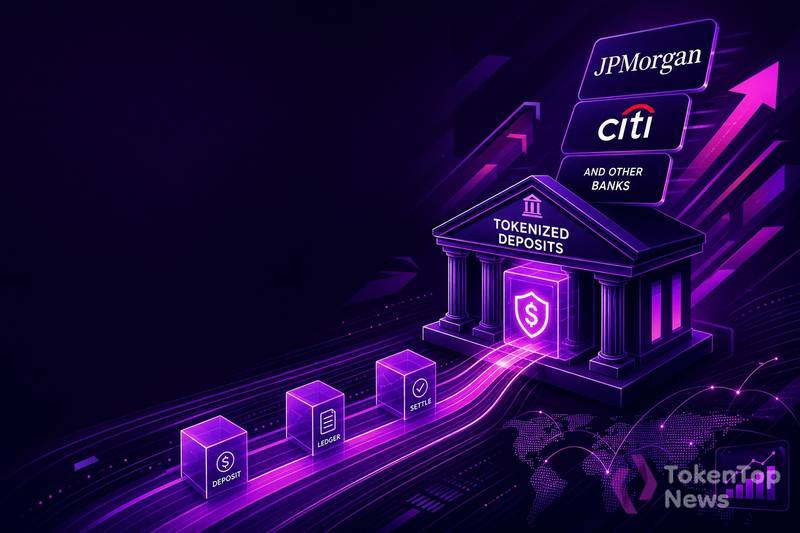
What the WSJ Report Says About the Banks’ Tokenized Deposit Plan
The WSJ report indicates that some of the largest banks in the United States, including JPMorgan and Citi, are exploring a joint effort to create a tokenized deposit system. The plan, as reported by Reuters citing the WSJ, involves the banks working together on a shared digital asset initiative.
This is a reported plan, not a confirmed live rollout. No official launch date or final list of participating institutions has been disclosed publicly. The development remains in the planning stage, and details about the system’s architecture or timeline are limited.
JPMorgan has already been active in the tokenization space through its Kinexys platform, which explores deposit tokens as a way to represent commercial bank money on blockchain rails. Citi has similarly been building out its own token services, integrating them with USD clearing and cross-border payment capabilities.
Why Tokenized Deposits Matter for Traditional Finance and Crypto
Tokenized deposits refer to digital representations of bank deposits recorded on a blockchain or distributed ledger. Unlike stablecoins issued by non-bank entities, tokenized deposits would remain liabilities of regulated banks, maintaining the same legal and economic characteristics as traditional deposits.
The involvement of institutions like JPMorgan and Citi is notable because it represents a bridge between conventional banking infrastructure and blockchain technology. A joint system among multiple major banks could create interoperable digital money that settles faster than current rails, particularly for cross-border and institutional transactions.
Readers may compare tokenized deposits with stablecoins such as USDT or USDC USDC +0.00% , but the two differ in structure. Tokenized deposits carry the backing and regulatory framework of the issuing bank, while stablecoins are typically issued by non-bank companies and backed by reserves. Both aim to bring dollar-denominated value onto blockchain networks, but they operate under different regulatory and risk profiles.
This development arrives as institutional interest in blockchain infrastructure continues to grow. Recent on-chain activity, such as dormant wallets moving large amounts of ETH after years of inactivity, reflects broader engagement with digital asset networks. Meanwhile, exchange inflow patterns on platforms like Binance suggest that institutional and large-scale participants remain active across the crypto ecosystem.
What to Watch Next After the Report
With the plan still at an early stage, several questions remain unanswered. Investors and industry observers should watch for official statements or confirmations from JPMorgan, Citi, or any other named participants. The banks have not publicly confirmed the scope or structure of the reported system.
Regulatory framing will be a key factor. Any tokenized deposit system operated by U.S. banks would likely require clarity from regulators on how these instruments fit within existing banking and securities law. The approach regulators take could shape whether tokenized deposits become a mainstream feature of bank-to-bank settlement.
Implementation details, including the choice of blockchain infrastructure, interoperability standards, and the range of use cases targeted, remain unclear from the available reporting. As ecosystem expansion continues across the industry, with moves like Cosmos Labs acquiring Mintscan to broaden its infrastructure reach, the question is whether major banks will build on existing public or permissioned networks or develop proprietary solutions.
For now, the WSJ report positions this as a developing story. If confirmed and executed, a joint tokenized deposit system from the largest U.S. banks would represent one of the most significant institutional commitments to blockchain-based financial infrastructure to date.
Disclaimer: This article is for informational purposes only and does not constitute financial or investment advice. Cryptocurrency and digital asset markets carry significant risk. Always do your own research before making decisions.