The Bank of Korea is pushing for a banks-first approach to stablecoin issuance in South Korea, arguing that a protection mechanism must be in place before the broader crypto market can safely expand. Deputy Governor Ryoo Sang-dai said the sequencing is meant to guard against market disruption and consumer harm as the country moves toward won-pegged stablecoins.
Why the Bank of Korea wants a protection mechanism first
Bank of Korea Deputy Governor Ryoo Sang-dai said stablecoin issuance should initially be allowed primarily through banks before expanding to non-banking sectors. The proposal is part of South Korea’s wider policy discussion around introducing regulated digital assets tied to the Korean won.
“The aim is to establish a safety net, considering the potential for market disruption or consumer harm.”
— Ryoo Sang-dai, Deputy Governor, Bank of Korea (Yonhap)
Ryoo’s remarks are tied to the Lee Jae Myung administration’s push to adopt won-pegged stablecoins as part of a broader financial modernization agenda. Rather than rejecting crypto outright, the central bank is arguing for sequencing, letting regulated banks build the infrastructure and risk controls before opening the door to non-bank issuers.
The distinction matters for exchanges and fintech firms that may eventually want to issue or facilitate stablecoin transactions. Under this framework, they would need to wait until the banking sector has established baseline safeguards.
What the Bank of Korea’s own data says about stablecoin risk
The Bank of Korea’s June 2025 Financial Stability Report includes a dedicated section titled “Stablecoin Trends and Potential Risks Related to Financial Stability.” The report said the total global market capitalization of the 10 major stablecoins reached USD 230.9 billion at the end of May 2025.
Korea’s daily average stablecoin transaction volume rose from KRW 0.28 trillion in 2024 to KRW 0.73 trillion in the first quarter of 2025. Despite that growth, South Korea still accounts for only 0.3% of global stablecoin transactions, suggesting the market is early-stage but accelerating fast.
Domestic investors’ crypto holdings rose to KRW 121.8 trillion in January 2025 before falling to KRW 84.1 trillion by the end of March 2025. That KRW 37.7 trillion swing in three months illustrates the volatility the central bank is trying to cushion against, and why officials see a protection mechanism as urgent before stablecoin adoption widens further.
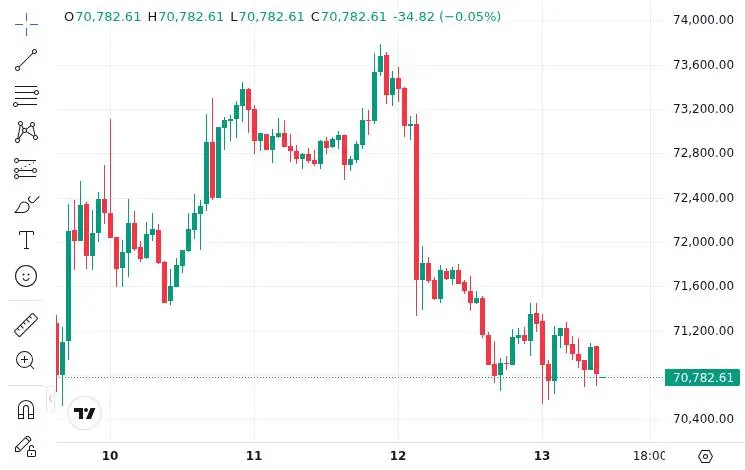
Bitcoin traded at $70,804 at press time, down 1.3% over the past 24 hours, with global crypto sentiment at “Extreme Fear” on the Fear & Greed Index at 12. The risk-off backdrop reinforces why regulators in Seoul are focused on building safeguards before expanding access.
What a banks-first stablecoin framework could mean for South Korea
South Korea is actively discussing second-phase crypto asset legislation that would create a formal stablecoin framework. The Bank of Korea’s report flags four core stability concerns around wider adoption: coin-run risk, payment and operational risk, foreign-exchange and capital-flow risk, and monetary-policy effectiveness risk.
Coin-run risk, in particular, mirrors the dynamics seen in traditional bank runs. If a stablecoin issuer cannot meet redemption demands, the result could cascade across connected crypto markets. By restricting initial issuance to banks, the central bank is betting that existing prudential supervision and capital requirements can absorb those shocks.
For exchanges and retail investors, a banks-first rollout would mean won-pegged stablecoins are initially available only through traditional banking channels. Non-bank issuers, including crypto-native firms, would need to wait for the framework to expand, likely contingent on the first phase proving stable.
The foreign-exchange and capital-flow risks are also significant. If won-pegged stablecoins gain traction for cross-border payments, they could create channels for capital movement outside the Bank of Korea’s existing monitoring systems. That concern is amplified by Korea’s daily stablecoin volume nearly tripling in a single year.
Whether the banks-first approach survives the legislative process intact will depend on how South Korea’s second-phase crypto legislation takes shape. For now, the central bank has made its position clear: protection first, expansion second.
Disclaimer: This article is for informational purposes only and does not constitute financial or investment advice. Cryptocurrency and digital asset markets carry significant risk. Always do your own research before making decisions.