
Bitcoin closed March 2026 with its first green monthly candle after five consecutive months of losses, snapping a losing streak that had dragged BTC down from above $90,000. The modest 1.96% gain offered a technical reprieve, but sentiment remains deeply cautious with the Fear and Greed Index stuck in extreme fear territory.
Bitcoin Ends a Five-Month Losing Streak With a Green Monthly Close
A green monthly close means the asset finished the month at a higher price than where it opened. Bitcoin’s March candle opened at $66,973.26 and closed at $68,284.48, a gain of roughly 1.96%. It was the first positive monthly finish since September 2025.
The five red months that preceded it were punishing. October 2025 fell 3.89%, November plunged 17.56%, December slipped 3.00%, January 2026 dropped 10.16%, and February lost 14.95%. Bitfinex Alpha analysts described the run as “five consecutive monthly red closes for only the second time ever,” linking the streak to a broader leverage reset and macro headwinds entering March.
The cumulative damage from that stretch was severe. Traders who watched Bitcoin struggle below key resistance levels throughout early 2026 had reason to question whether the cycle had turned, and some analysts explored scenarios where Bitcoin could drop to $55K before any meaningful recovery.
Why Bitcoin’s Monthly Reversal Matters for Market Sentiment
Breaking a five-month losing streak changes the tone of the trend discussion, even if the gain itself was modest. A single green monthly close does not confirm a reversal, but it gives traders a fresh reference point after an extended period of weakness.
As of April 1, Bitcoin traded near $68,080, with a market cap of approximately $1.37 trillion and 24-hour trading volume near $57.1 billion.
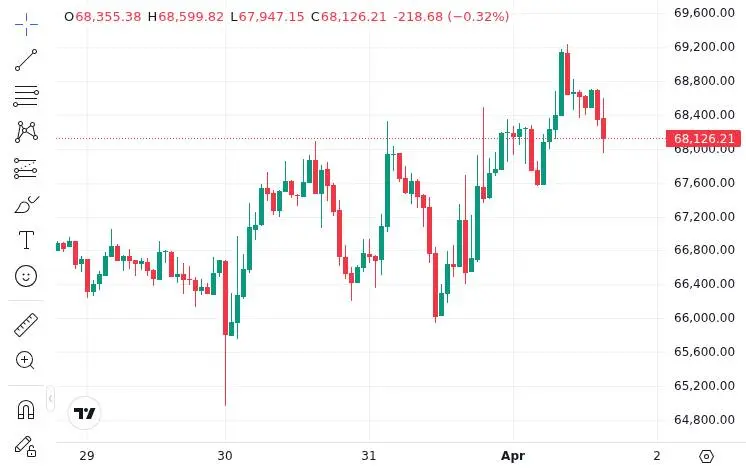
Yet the green candle has not translated into broader confidence. The Crypto Fear and Greed Index printed 8 out of 100 on April 1, labeled Extreme Fear. That reading suggests market participants remain deeply risk-averse despite the streak ending.
Riya Sehgal, writing for the Economic Times, noted that “the crypto market appears to be stabilizing after a volatile February,” while framing demand as cautious rather than euphoric. The report highlighted approximately $1 billion in inflows as a sign of investor faith, though the extreme fear reading complicates that narrative.
The macro backdrop adds another layer of caution. On March 18, 2026, the Federal Reserve held its target rate at 3.5% to 3.75%, keeping monetary policy restrictive. The central bank’s stance has remained a headwind for risk assets throughout the downturn, a concern that extends to broader questions about how Federal Reserve officials view digital asset policy.
Adding to the pressure, a White House proclamation imposed a temporary 10% import surcharge effective February 24 through July 24, 2026, under Section 122. Bitfinex linked that trade-and-rates combination to defensive risk sentiment even as Bitcoin’s monthly candle turned green.
Exchange reserves offer additional context on how participants positioned through the losing streak and into March’s recovery. On-chain flows reflected a market still working through a leverage reset rather than aggressively re-entering risk.
What to Watch After Bitcoin’s First Positive Month in Six Months
The losing streak is broken, but follow-through performance will determine whether March was a turning point or a brief pause in a longer downtrend. Market participants will look to April’s weekly and monthly closes for confirmation.
A second consecutive green month would strengthen the case that the worst of the drawdown is behind Bitcoin. Failure to hold the $66,900 to $68,000 range could reopen questions about deeper downside, particularly given that the broader crypto space also faced stress from $52 million in crypto hacks during March alone.
Sustained strength matters more than a single positive monthly candle. With the Fear and Greed Index at 8, the Fed holding rates steady, and trade policy adding uncertainty through mid-2026, the path forward for Bitcoin remains one where confirmation carries more weight than any single data point.
Disclaimer: This article is for informational purposes only and does not constitute financial or investment advice. Cryptocurrency and digital asset markets carry significant risk. Always do your own research before making decisions.


