
Bitcoin broke back above the roughly $69,400 Traders’ Lower Realized Price after ceasefire headlines triggered a broad risk-on move across global markets, raising the question of whether bulls can defend this on-chain cost-basis level as new support.
The move came as BTC surged as much as 7.4% from a session low of $67,274 to $72,760, according to Cointelegraph reporting. At press time, Bitcoin traded near $71,888 with a market cap of approximately $1.44 trillion and 24-hour trading volume of $35.4 billion.
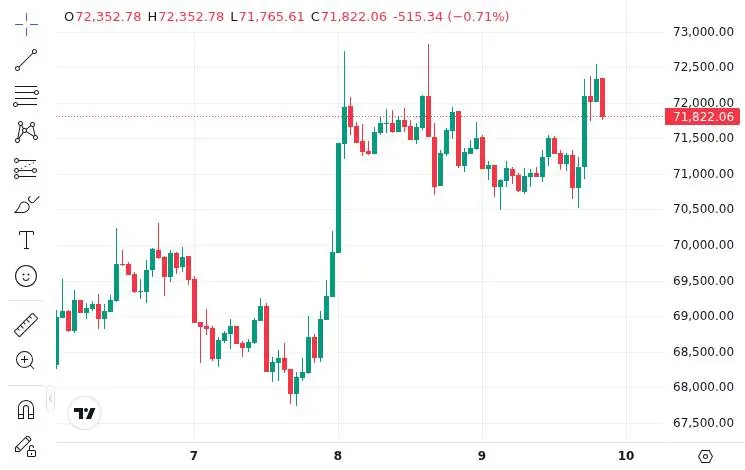
The rally liquidated over $431 million in short positions within 24 hours, with BTC-specific shorts accounting for $214.8 million of that total. The squeeze underscored how aggressively the market was positioned for further downside before the ceasefire catalyst hit.
Why the $69.4K Traders’ Lower Realized Price Matters
The Traders’ Lower Realized Price is an on-chain metric that tracks the average cost basis of active market participants, filtering out long-dormant coins. It acts as a boundary between constructive and defensive market structure: when price trades above it, active traders are collectively in profit, which tends to support risk appetite.
According to unconfirmed reports, Bitcoin flipped the approximately $69,400 level from resistance into support during the ceasefire-driven rally. A separate NewsBTC analysis syndicated on TradingView referenced $75,000 as the lower band of the Traders’ on-chain Realized Price and cited the active-trader realized price near $84,700.
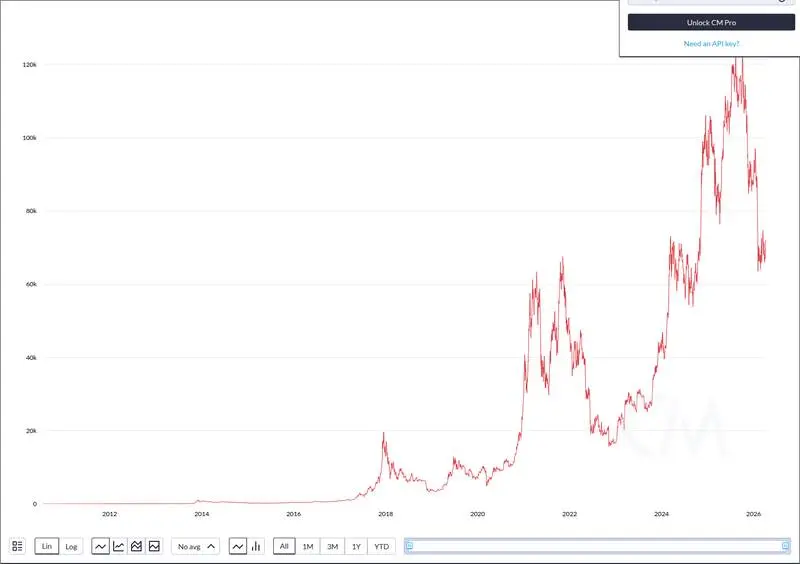
When price reclaims a cost-basis level after trading below it, the dynamic shifts: holders who were underwater become breakeven or profitable, reducing sell pressure. A rejection back below the same level, by contrast, signals that sellers are using the bounce to exit.
Ceasefire Headline Effect on Bitcoin’s Price Behavior
The breakout did not happen in isolation. U.S. equities staged a parallel relief rally, with the S&P 500 gaining 0.7%, the Dow adding 382 points, and the Nasdaq rising 0.8% during the same session. Benchmark U.S. crude settled at $95.78 (+1.4%) and Brent at $94.87 (+0.1%), reflecting the complex risk repricing around Strait of Hormuz uncertainty.
Bitcoin’s sensitivity to geopolitical headlines has increased as institutional participation has grown. The ceasefire news compressed risk premiums across asset classes simultaneously, and BTC’s 7.4% intraday swing suggests the crypto market absorbed that macro impulse with amplified volatility.
Critically, the Fear & Greed Index still read 14, deep in Extreme Fear territory, even as price surged past $72,000. That disconnect between sentiment and price action suggests the move was driven by forced short covering rather than a broad shift in conviction.
Can Bulls Hold Control Above $69.4K?
For the reclaim to carry weight, price needs sustained acceptance above the Traders’ Lower Realized Price zone, not just a wick through it. Bullish confirmation would involve daily closes above the level, followed by a successful retest where dip buyers step in on any pullback toward the $69,000-$70,000 area.
Invalidation is straightforward: a decisive drop back below the cost-basis line would indicate the reclaim was a short-squeeze artifact rather than a genuine structural shift. In headline-driven environments, fades of the initial move are common once the news premium dissipates.
Traders navigating this setup should note that ceasefire developments remain fluid, and the same geopolitical catalyst that powered the rally could reverse if negotiations stall. Position sizing and risk management matter more than conviction in these conditions.
Disclaimer: This article is for informational purposes only and does not constitute financial or investment advice. Cryptocurrency and digital asset markets carry significant risk. Always do your own research before making decisions.
Tracks corporations, public companies, and funds using Bitcoin as a treasury reserve or strategic balance-sheet asset.
Tracks AI-agent tokens, compute and data infrastructure, and where crypto markets are pricing AI-linked narratives.


