
Bitcoin’s stress cycle appears to be maturing as on-chain metrics show exhaustion in selling pressure, but a confirmed bullish reversal remains elusive with the Fear and Greed Index at 14 and realized profits down more than 96% from mid-2025 peaks.
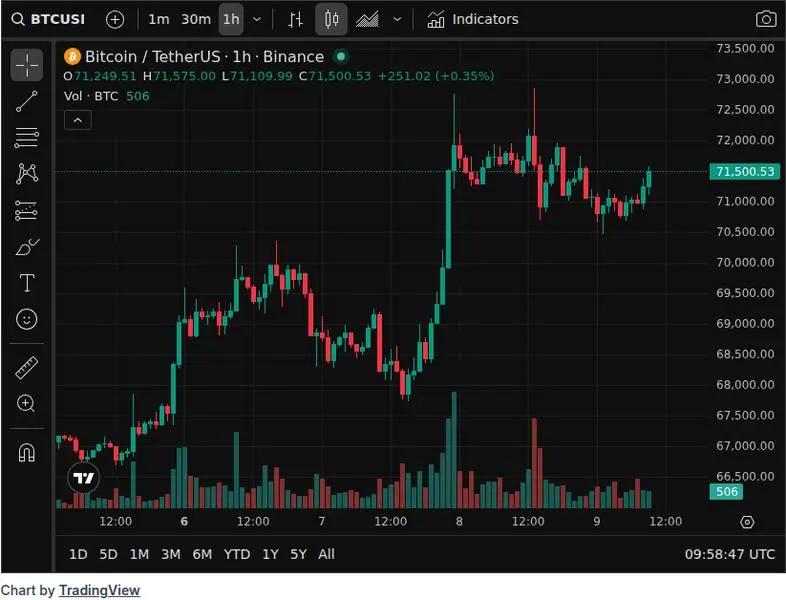
BTC traded at $71,363 at press time, down 0.44% over the past 24 hours, with a market cap of $1.43 trillion and daily trading volume of $37.7 billion.
Why Bitcoin’s Stress Cycle Looks Late-Stage
A stress cycle in market terms refers to a prolonged period where holders absorb unrealized losses, selling pressure compresses, and volume dries up without a clear directional resolution. Late-stage stress differs from early reversal in one key way: the pain is fading, but buyers have not yet stepped in with conviction.
A Glassnode report noted that Bitcoin stabilized around $70,000 after a sharp selloff to approximately $67,000, but upside momentum remains tentative. The stabilization suggests sellers are running out of urgency, not that buyers have taken control.
Glassnode reported that Relative Unrealized Loss has held above 15% of market cap over the prior two months. That level indicates elevated fear across the holder base, but it sits below the extreme capitulation thresholds seen in prior bear market bottoms.
Volatility Compression and Positioning
Spot volume remains subdued, a hallmark of late-cycle stress where neither side commits capital aggressively. Entity-Adjusted Realized Profit fell from roughly $3 billion per day in July 2025 to below $100 million per day currently, a decline exceeding 96%.
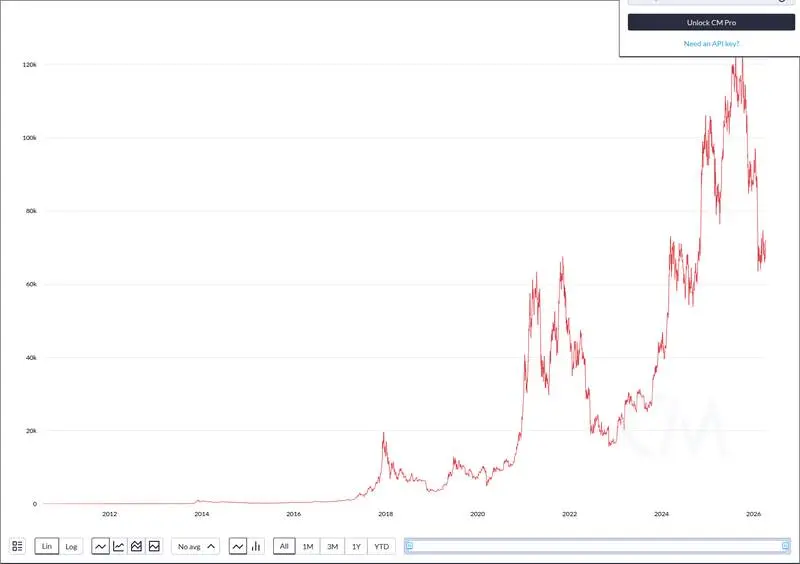
That realized-profit contraction signals that most remaining holders are either underwater or unwilling to sell at current levels. When profit-taking dries up this aggressively, it often marks the tail end of a stress regime, but not necessarily the start of recovery.
What Is Blocking a Confirmed BTC Reversal
Macro headwinds remain the primary obstacle. Risk appetite across global markets has not shifted meaningfully, and liquidity conditions continue to favor caution over aggressive positioning in risk assets like Bitcoin.
The Fear and Greed Index printed 14 on April 9, 2026, deep in Extreme Fear territory. That reading aligns with a market where stress may be maturing but participants are far from confident in any recovery thesis.
Overhead Supply and the Demand Gap
Glassnode identified significant overhead supply that must be absorbed before any durable move higher. Analysts described weak spot volumes with support concentrated around $70,200 and major resistance above $82,000.
That $12,000 gap between support and resistance represents the “no man’s land” where a reversal needs sustained demand inflows to break through. Without those inflows, Bitcoin risks consolidating indefinitely or retesting lower levels.
Downside Risk Scenarios
If macro conditions deteriorate further or liquidity tightens, the $67,000 low from the recent selloff becomes the immediate invalidation level. A break below that mark would suggest the stress cycle is deepening rather than ending.
Spot Bitcoin ETF flow direction adds another variable. Sustained outflows from ETF products could amplify selling pressure at a time when organic demand is already thin.
Signals That Would Confirm the Transition From Stress to Recovery
The gap between “stress is ending” and “reversal is confirmed” requires specific, observable triggers. Below is a framework for evaluating conviction levels.
Early signals (low conviction):
- Fear and Greed Index climbs back above 25 and holds for at least one week
- Daily spot volume exceeds $50 billion consistently, up from the current $37.7 billion
- Relative Unrealized Loss drops below 10% of market cap
Medium signals (rising conviction):
- Realized Profit recovers above $500 million per day, signaling renewed profit-taking from a position of strength
- BTC reclaims and holds above $75,000 on a weekly close
- Net ETF inflows turn positive and sustain for two or more consecutive weeks
High-conviction signals:
- A decisive weekly close above the $82,000 resistance zone identified by analysts
- Fear and Greed Index returns to Neutral (above 45) without an immediate reversal
- On-chain exchange outflows accelerate, indicating holders are moving BTC to cold storage
Until several of these thresholds are met in combination, the current market structure favors patience. The stress cycle may be losing intensity, but the data as of April 9 does not yet support calling a durable bottom.
Disclaimer: This article is for informational purposes only and does not constitute financial or investment advice. Cryptocurrency and digital asset markets carry significant risk. Always do your own research before making decisions.


