
Charles Schwab is preparing to let users buy Bitcoin directly through a new crypto vertical, with its official website labeling the product as “coming soon.” The move would make one of America’s largest brokerages, with 37 million active accounts, a direct competitor to Fidelity in the spot crypto trading space.
What Charles Schwab’s Crypto Vertical Launch Actually Confirms
Schwab’s official cryptocurrency page confirms that “Schwab Crypto” is accepting early-access sign-ups for an account that will let users buy and sell Bitcoin and Ethereum directly. The account will be offered through Charles Schwab Premier Bank, SSB, not through a standard brokerage account.
No public launch date appears on Schwab’s official materials. The product page still says “coming soon,” and CEO Rick Wurster said in a March 13, 2025 interview on Yahoo Finance only that he hoped direct spot crypto would be offered in 2025.
“We hope it will be this year’s thing. The regulatory environment has shifted as it relates to banks being able to offer crypto directly to clients.”
— Rick Wurster, CEO of Charles Schwab
What Remains Unanswered
The headline references a broader crypto vertical strategy, but Schwab’s public materials only confirm the direct Bitcoin and Ethereum buying feature. Pricing structure, custody arrangements, and whether additional assets will be supported have not been disclosed.
According to the truncated headline tip, the initiative is described as part of a broader unnamed crypto vertical strategy beyond just the direct-buying rollout, though Schwab’s official materials do not confirm that exact framing.
Why Bitcoin Access Is the Real News Hook
Bitcoin is the only asset explicitly named in the original headline, and the practical takeaway for Schwab’s 37 million active brokerage account holders is straightforward: direct access to buy Bitcoin without leaving the Schwab ecosystem.
The demand signal is already visible. Wurster disclosed that Schwab’s cryptocurrency website saw a 400% increase in visits during Q4 2024, and 70% of those visitors were prospects rather than existing clients. That level of inbound interest from non-customers suggests the crypto vertical doubles as a client acquisition tool.
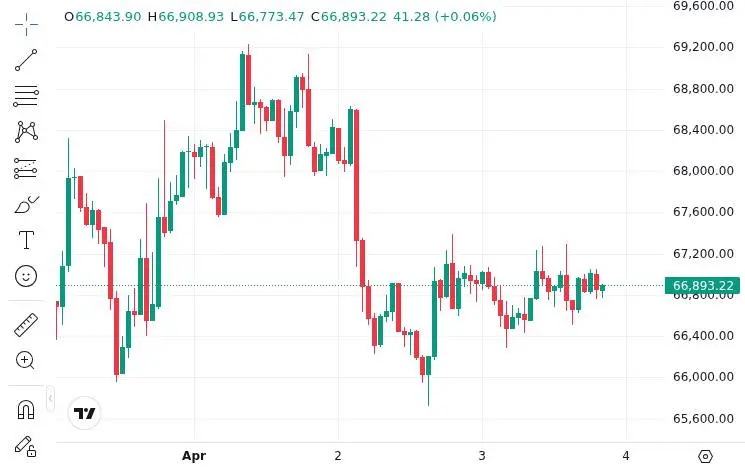
At press time, Bitcoin was trading near $66,854 with a market cap of roughly $1.34 trillion and approximately $29.51 billion in 24-hour trading volume.
The “Crypto Vertical” Label Versus the Concrete Detail
The phrase “crypto vertical” suggests an organizational commitment larger than a single product launch. But the only concrete user-facing detail confirmed so far is Bitcoin and Ethereum buying through Schwab Crypto. For readers tracking institutional crypto adoption, the Bitcoin access point is the actionable detail; the vertical label is positioning.
The broader institutional push into crypto comes at a time when regulatory scrutiny of the industry remains intense. Recent compliance actions, such as allegations that Circle logged $420 million in compliance failures, underscore why Schwab’s decision to route its crypto offering through a regulated banking subsidiary matters.
How the Move Fits Into Charles Schwab’s Broader Crypto Push
Schwab is not first to this market. Fidelity already lets eligible U.S. users buy, sell, and transfer Bitcoin and Ethereum in the same app where they trade stocks and ETFs. What distinguishes Schwab’s entry is scale and timing: a legacy brokerage with tens of millions of accounts moving from crypto exposure products, like ETFs, into direct spot access.
Wurster explicitly tied the timing to a regulatory shift. His March 2025 comments indicated that the environment for banks offering crypto directly to clients had changed enough for Schwab to move forward. The decision to house the product under Charles Schwab Premier Bank, SSB, rather than the brokerage arm, reflects how the company is navigating that regulatory framework.
This kind of institutional positioning through regulated banking entities stands in contrast to the crypto industry’s ongoing efforts to establish clearer compliance standards. Developments like Cambodia’s new cybercrime law targeting scam compounds and the Ethereum Foundation’s staking disclosures highlight just how varied the regulatory landscape remains across the sector.
The key details readers should watch for next: a confirmed launch date, the full list of supported assets, fee structure, and whether the “broader initiative” referenced in the headline includes services beyond spot trading.
Disclaimer: This article is for informational purposes only and does not constitute financial or investment advice. Cryptocurrency and digital asset markets carry significant risk. Always do your own research before making decisions.


