
Michael Saylor, executive chairman of Strategy (formerly MicroStrategy), declared that Bitcoin's traditional four-year cycle is "dead" during a CNBC Crypto World appearance, arguing that the cryptocurrency has entered a fundamentally different market regime that makes historical cycle-based timing unreliable.
What Michael Saylor Actually Said About Bitcoin's Four-Year Cycle
Saylor made the remarks in a CNBC Crypto World segment published on November 28, 2025, where he provided his Bitcoin outlook for 2026 and addressed whether the cryptocurrency's long-observed four-year price pattern still holds.
The four-year cycle has been a cornerstone of Bitcoin market analysis for over a decade. It ties BTC's price trajectory to the halving schedule, which cuts miner block rewards roughly every four years. Previous cycles saw Bitcoin peak approximately 12 to 18 months after each halving, followed by steep drawdowns.
Saylor's position is that this framework no longer describes how Bitcoin actually trades. According to a PANews summary of the interview, he argued Bitcoin should be judged on a timescale longer than four years and that using short-term fluctuations to judge long-term structural change is a "directional error."
Why Saylor Believes Bitcoin May No Longer Follow the Old Pattern
The thesis is not simply a price call. Saylor is making a structural argument: the forces that drove previous boom-bust cycles, primarily retail speculation layered on top of halving-driven supply shocks, have been overtaken by institutional adoption and corporate treasury accumulation.
Strategy itself holds one of the largest corporate Bitcoin treasuries in the world, and other firms have followed. Metaplanet has publicly outlined plans to accumulate 100,000 BTC by end of 2026, representing a growing class of buyers who operate on multi-year horizons rather than cycle-timing strategies.
Institutional vehicles have also changed the demand picture. Spot Bitcoin ETFs have drawn consistent inflows, creating a persistent bid that did not exist in prior cycles. This steady demand layer, Saylor's argument implies, dampens the violent drawdowns that historically defined the "crypto winter" phase of each four-year rotation.

Declining exchange reserves reinforce this narrative. As more BTC moves into long-term custody, whether corporate treasuries, ETF vaults, or cold storage, the supply available for speculative trading shrinks. That structural shift is central to the case that old cyclical dynamics are breaking down.
What the "Cycle Is Dead" Call Means for BTC Investors
If Saylor's view gains traction, the practical consequence is straightforward: investors who rely on the four-year cycle to time entries and exits lose their most popular timing tool.
The traditional playbook said to accumulate during the bear phase (roughly years three and four of the cycle), hold through the halving, and sell into the euphoria that follows. If the cycle no longer produces reliable bear-phase lows and post-halving peaks, that strategy becomes a coin flip rather than a framework.
Bitcoin currently trades at $67,343 with a market cap of approximately $1.35 trillion. The 24-hour change of +0.68% reflects relatively muted price action despite the broader market sitting at a Fear & Greed Index reading of 11, classified as Extreme Fear.
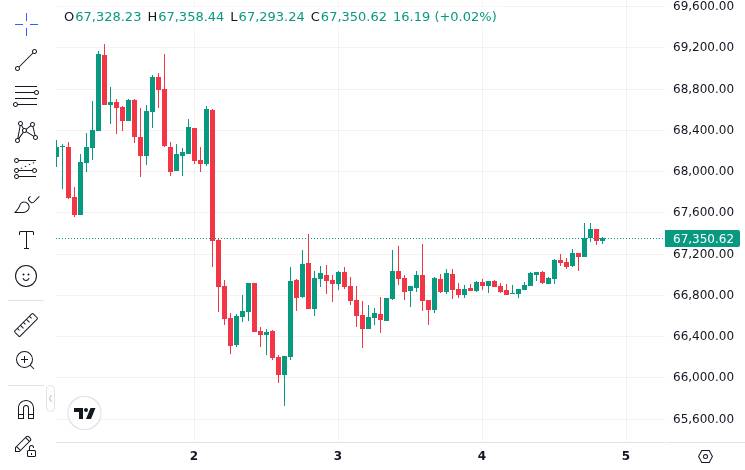
That disconnect between extreme sentiment and relatively stable price action could itself be evidence for Saylor's thesis. In previous cycles, an Extreme Fear reading of 11 would typically coincide with sharp drawdowns. A $67,343 BTC price holding steady during deep fear suggests the market structure may indeed be different this time.
Saylor's framing also matters for how investors interpret macroeconomic catalysts like the upcoming Fed Chair confirmation hearings. If Bitcoin no longer follows a predictable four-year rhythm, macro events and institutional flows become more important price drivers than halving-based models.
The key distinction Saylor drew is worth repeating in plain terms: judging a long-term structural shift by short-term price moves is a category error. Whether that thesis proves correct will depend not on any single quarter's price action, but on whether institutional demand continues to reshape Bitcoin's market structure over the coming years.
Investors watching for confirmation or refutation of the "dead cycle" thesis should track corporate treasury announcements, ETF flow trends, and exchange reserve data rather than overlaying old four-year charts onto current price action.
Disclaimer: This article is for informational purposes only and does not constitute financial or investment advice. Cryptocurrency and digital asset markets carry significant risk. Always do your own research before making decisions.