
South Africa's National Treasury has published draft Capital Flow Management Regulations that would bring crypto asset transactions under the country's exchange-control regime, requiring transactions above a set threshold to pass through authorized service providers or receive direct Treasury approval.
The draft rules, published on 17 April 2026 in Government Notice No. 54520 and Government Gazette No. 7375, are issued under section 9(1) of the Currency and Exchanges Act, 1933. They explicitly include crypto assets in the definition of capital and create a new category of authorised crypto asset service provider for entities facilitating the import or export of capital using crypto assets.
The public comment period closes on 18 May 2026, according to the Treasury-hosted media statement, though a stale copy on gov.za still displays 10 June 2026.
What the Draft Rules Would Change for Crypto Transactions
Scope of the New Controls
Regulation 3 of the draft would bar anyone other than an authorised crypto asset service provider from buying, selling, borrowing, or lending crypto assets above a minister-determined threshold without Treasury permission. The threshold amount has not yet been specified, leaving room for calibration during the comment period.
This means South African residents and businesses conducting cross-border crypto transfers would face the same capital-control scrutiny currently applied to traditional foreign exchange transactions. Frank Leonette, founder of South African exchange Afridax, noted that cross-border crypto transfers would require approval, aligning digital assets with traditional foreign exchange controls.
Declaration and Reporting Duties
Regulation 8 would require anyone in South Africa who controls, obtains, or becomes entitled to crypto assets above the threshold to declare them within 30 days. Treasury, an authorised dealer, or an authorised crypto asset service provider would then have the option to purchase those assets.
Travellers face separate obligations. Regulation 4 requires outbound travellers to declare crypto assets intended for removal from South Africa when requested by an enforcement officer. Regulation 5 requires inbound travellers holding crypto assets to declare them at a recognised place of entry.
Penalties for Non-Compliance
Draft regulation 29 sets criminal penalties at fines up to R1,000,000, imprisonment up to five years, or both. For crypto-specific offences, the fine can be the greater of R1,000,000 or the full value of the asset involved.
Why South Africa Is Tightening Oversight of Crypto and Cross-Border Flows
Policy Context and Regulatory Stack
Treasury signaled this move in the 25 February 2026 Budget Speech, pledging to publish draft rules under the Currency and Exchanges Act to include crypto assets in the capital flow management regime. Annexure E of the 2026 Budget Review confirmed the reform is meant to complement the Financial Sector Conduct Authority's October 2022 classification of crypto assets as financial products and the Financial Intelligence Centre's 2025 decision to treat crypto asset service providers as accountable institutions.
Legal analysts at Werksmans Attorneys have noted that the draft arrives after litigation-driven uncertainty over whether crypto assets already counted as capital under the old exchange-control regime. The new regulations would remove that ambiguity by explicitly defining crypto assets as capital.
Cross-Border Enforcement Gap
Crypto rails allow value to move outside traditional banking channels, creating a gap in South Africa's ability to monitor offshore transfers. The draft regulations address this directly by requiring that cross-border crypto transactions above the threshold flow through authorised intermediaries who would be subject to the same reporting and compliance obligations as authorised dealers in the traditional foreign exchange system.
This positions the draft as one component of Treasury's wider 2026 capital-flow modernization package, which pairs tighter crypto controls with broader liberalisation elsewhere in the exchange-control regime.
What Exchanges, Investors, and Crypto Businesses Should Watch Next
Timeline and Process
The comment period closing 18 May 2026 is the immediate milestone. After that, Treasury will review submissions, potentially revise the draft, and publish final regulations. No implementation date has been set, and the threshold amounts that trigger compliance obligations remain unspecified.
Compliance Preparation
Exchanges operating in South Africa should review their KYC and AML controls against the new authorised crypto asset service provider requirements. Firms facilitating cross-border transfers will need to assess whether their current transaction monitoring can flag and report transfers above the eventual threshold.
Individual holders above the threshold would face a 30-day declaration window once the rules take effect, making asset inventory and record-keeping an immediate preparation step.
Broader Market Context
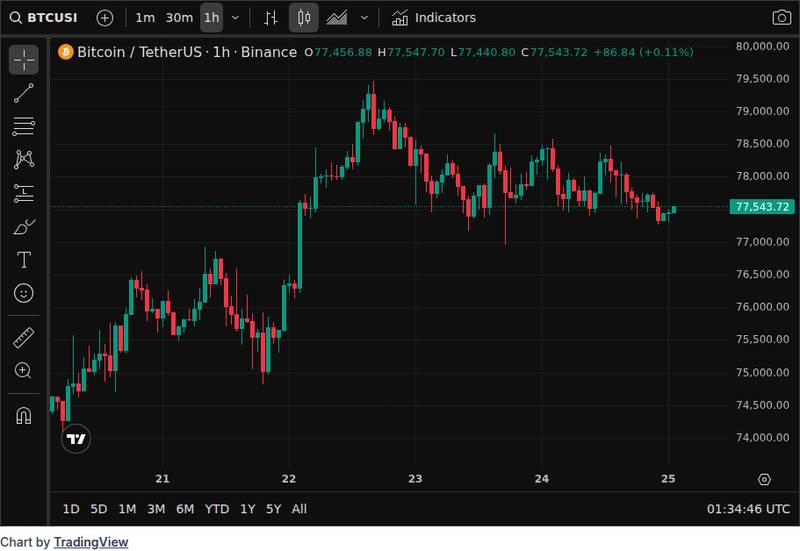
Bitcoin traded at $77,516 at press time, down 0.74% over 24 hours, while the crypto Fear and Greed Index sat at 31, reflecting a broader defensive sentiment across digital asset markets.
South Africa's draft regulations represent one of the most explicit attempts by an emerging market to fold crypto assets into existing capital-control infrastructure. Industry participants have until 18 May 2026 to submit comments that could shape the final threshold levels, compliance timelines, and enforcement mechanisms.
Disclaimer: This article is for informational purposes only and does not constitute financial or investment advice. Cryptocurrency and digital asset markets carry significant risk. Always do your own research before making decisions.