
The Solana Foundation on April 6, 2026, unveiled STRIDE, a new security audit program for protocols built on Solana, alongside the Solana Incident Response Network (SIRN), a coordinated crisis response framework designed to raise ecosystem-wide security standards.
The announcement, titled “Raising the Bar on Solana Ecosystem Security,” introduces an eight-pillar assessment framework that publicly discloses protocol security findings. Protocols that pass the STRIDE assessment and hold more than $10 million in total value locked qualify for ongoing operational security monitoring and active threat detection funded by Solana Foundation grants.
Protocols crossing the $100 million TVL threshold become eligible for foundation-funded formal verification, a higher tier of mathematical assurance typically reserved for critical infrastructure code.
How STRIDE’s tiered thresholds fit Solana’s current scale
The $10 million and $100 million TVL cutoffs carry weight when measured against Solana’s current ecosystem size. At the time of the announcement, Solana’s total value locked stood at approximately $11.97 billion, meaning only protocols representing a meaningful share of ecosystem capital trigger enhanced security coverage.
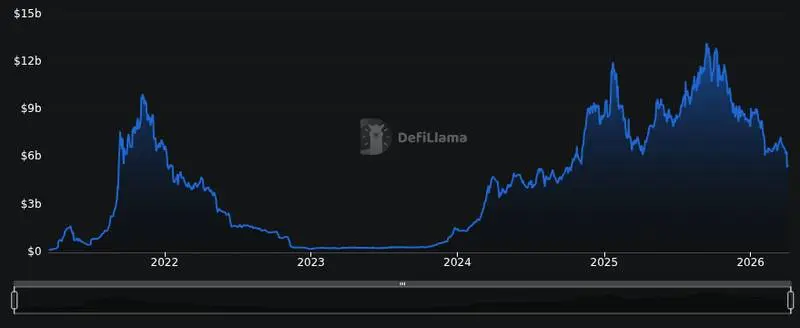
The tiered model creates a structured incentive: smaller protocols get a clear security roadmap through the eight-pillar assessment, while the largest DeFi applications receive the most intensive scrutiny. Public disclosure of findings adds accountability that voluntary private audits often lack.
SOL traded at $80.44 at press time, down 2.5% over 24 hours, with the broader crypto market registering an Extreme Fear reading of 11 on the Fear and Greed Index. The security initiative arrives during a period when investor confidence across crypto remains fragile, a backdrop that makes ecosystem trust-building efforts particularly relevant for projects like those tracking institutional Bitcoin accumulation strategies.
SIRN and the founding security partners
The Solana Incident Response Network pairs STRIDE’s preventive audits with a reactive crisis layer. SIRN’s founding participants include Asymmetric Research, OtterSec, Neodyme, Squads, and ZeroShadow, firms spanning smart contract auditing, formal verification, and real-time threat intelligence.
The Solana Foundation framed the dual launch as a deepening of its security commitment. In a post on X, the foundation wrote:
Solana was built for security. As the ecosystem scales, so does our investment in the tools, standards, and support.
Today that commitment deepens with a new security program, active monitoring, formal verification for top protocols, and a new crisis response network.
Learn… pic.twitter.com/17M4TgqpsQ
— Solana Foundation (@SolanaFndn) April 6, 2026
Source: @SolanaFndn on X
Having a pre-established incident response network matters in an ecosystem where DeFi exploits can drain hundreds of millions in minutes. According to unconfirmed reports, the rollout gained urgency after Drift Protocol suffered a $286 million exploit less than a week earlier, though this has not been independently verified.
The coordinated response model contrasts with how many blockchain ecosystems currently handle security incidents, where individual protocols scramble to contact auditors and bridge providers ad hoc. SIRN’s structure aims to compress that response time by maintaining standing relationships and predefined communication channels, a concern shared across the broader digital asset landscape as institutional capital flows into crypto products.
Why ecosystem-level security standards matter now
The Solana Foundation’s move is not a government regulation but an ecosystem policy decision. By imposing voluntary yet publicly visible security standards, the foundation is positioning Solana-based protocols under a shared accountability framework that could influence developer and user trust.
For builders, the eight-pillar STRIDE assessment offers a concrete checklist rather than vague “get an audit” guidance. For users, public disclosure of results means security posture becomes a visible differentiator between protocols competing for deposits.
With Solana’s $11.97 billion TVL spread across hundreds of protocols, the risk surface is substantial. Foundation-funded monitoring for protocols above the $10 million threshold means the most capital-dense targets receive active surveillance without bearing the full cost themselves. This is relevant context for investors monitoring broader market movements, including large on-chain transfers across major networks.
Formal verification at the $100 million tier addresses the most consequential failure mode: a bug in a protocol holding a significant fraction of ecosystem value. Mathematical proof of contract correctness is the highest available assurance standard, and making it grant-funded removes a cost barrier that has historically limited its adoption to only the most well-capitalized projects.
The combined STRIDE and SIRN framework represents one of the most structured ecosystem security programs launched by a Layer 1 foundation to date, setting a benchmark that other networks may face pressure to match as DeFi competition intensifies.
Disclaimer: This article is for informational purposes only and does not constitute financial or investment advice. Cryptocurrency and digital asset markets carry significant risk. Always do your own research before making decisions.
Tracks tokenized stocks, real-world asset rails, issuer expansion, and the market structure behind on-chain financial products.
Tracks AI-agent tokens, compute and data infrastructure, and where crypto markets are pricing AI-linked narratives.


