
What Is Cloud Mining? How It Works and What to Expect


Cloud mining allows you to mine cryptocurrencies by renting remote computing power instead of owning hardware. This gives users immediate access to mining without handling equipment, electricity, or maintenance. By purchasing hash power, even beginners can participate in mining more easily and affordably.
The providers integrate all the rented hash power into mining pools that confirm blockchain transactions. The users get rewards according to the bought hash rate minus fees for service and maintenance. This removes almost all technical barriers, making mining accessible to non-technical users.

Understanding Cloud Mining
Cloud mining works because the provider operates all hardware, manages performance, and automates payouts on your behalf. Users simply rent computing power while the provider handles ASICs/GPUs, cooling systems, and uptime monitoring. Some platforms even integrate smart contracts to increase transparency and show real-time mining statistics.
There are two main cloud mining models:
- Hosted mining: Users rent physical hardware managed entirely by the provider; configuration control is limited.
- Hash power leasing: Users purchase computational power directly and do not own or operate any physical device.
Cloud Mining vs. Traditional Mining
Cloud mining is a low-effort alternative to traditional mining, which requires hardware ownership, energy management, and full technical management. While users renting hash power can boast of fast setup and global access, traditional mining provides complete hardware control at a significantly higher cost.
| Criteria | Cloud Mining | Traditional Mining |
|---|---|---|
| Setup Cost | Low initial investment; users pay for hash power only | High upfront cost for ASIC or GPU rigs |
| Maintenance | Managed by provider; zero physical work required | Requires user maintenance, upgrades, and cooling |
| Accessibility | Available globally via internet | Limited by location, power cost, and hardware availability |
| Profit Stability | Varies with provider performance and contract terms | Varies with hardware efficiency and local energy rates |
| Control Level | Low, provider manages operations | High, full control over hardware and configurations |
Advantages of Cloud Mining
The biggest advantage of cloud mining is its accessibility, allowing beginners to mine without technical skills or owning expensive equipment. This fast onboarding process makes it ideal for beginners who just want some exposure to cryptocurrency mining with minimal effort.
Cloud mining also cuts down on upfront and operating costs. Instead of buying ASICs and paying pricey electricity bills, users avoid paying for expensive hardware and electricity, instead paying a fixed or predictable service fee. This financial simplicity is one of the reasons cloud mining has grown so rapidly.
Returns differ by provider and depend on factors such as mining difficulty, coin price, and the efficiency of the platform. While some short-term contracts boast higher potential rewards, these also are more volatile and riskier. Needless to say, users should avoid platforms promoting guaranteed profits, which is a red flag in the cloud-mining industry.
Risks and Limitations of Cloud Mining
The primary risk of cloud mining is the lack of transparency about whether real mining hardware is running. Since users cannot inspect equipment, some providers may exaggerate profitability or operate no mining at all. This makes transparency and verifiable data essential before committing funds.
Mining profitability is inherently unstable. Factors such as network difficulty, block rewards, Bitcoin price, and maintenance fees can dramatically affect earnings. If the market drops or difficulty rises, rewards can sharply decrease. Given this volatility, long-term contracts should be approached carefully, especially in uncertain market conditions.
Another limitation is centralization, whereby major cloud mining farms control significant hash power and are capable of concentrating mining influence in the hands of a few organizations. This concentration of power contradicts the decentralized nature of blockchain networks and introduces systemic risk to the mining ecosystem.
Choosing a Reliable Cloud Mining Provider
A reliable cloud mining provider must present verifiable evidence of real mining activity. Users should expect transparent hash rates, public wallet addresses, and clear payout calculations that can be independently verified. These elements ensure your purchased hash power actually contributes to blockchain mining.
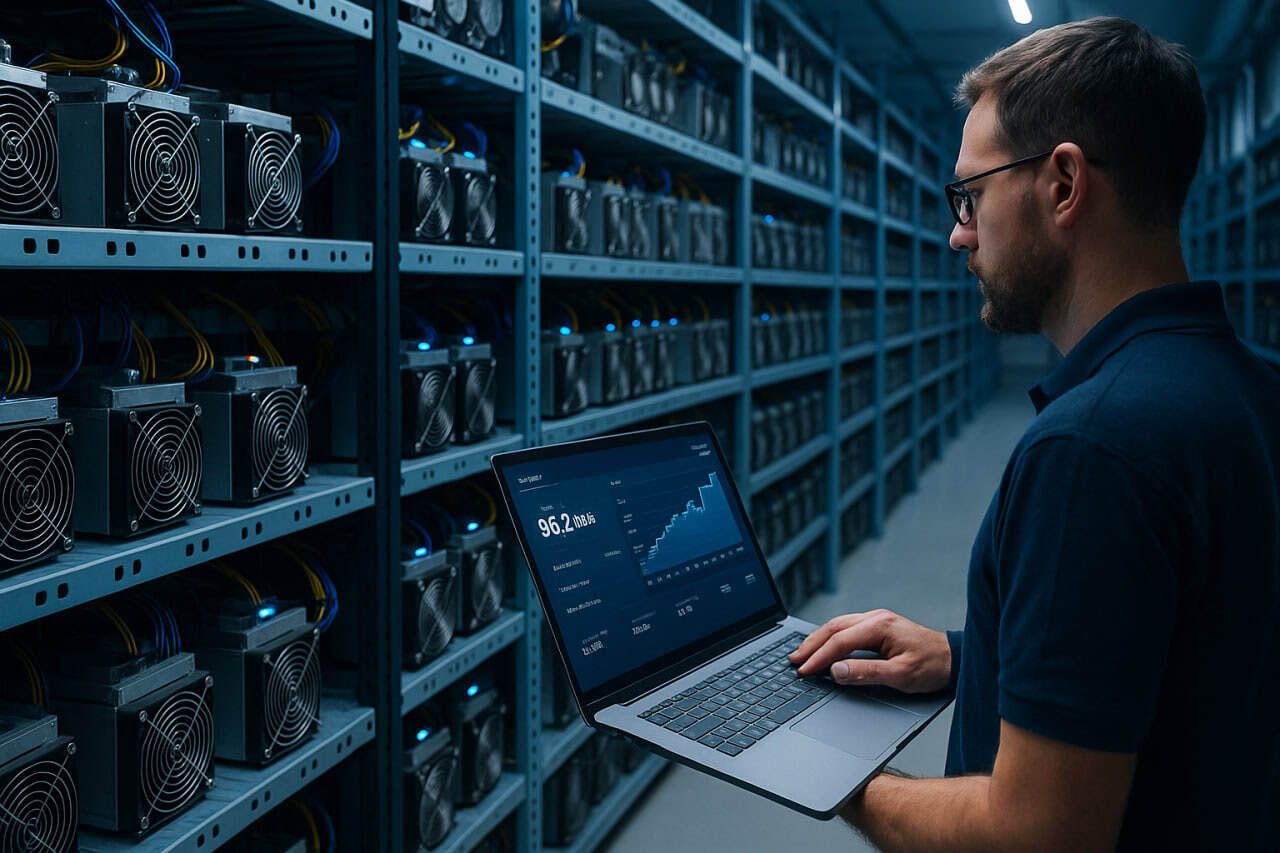
Before purchasing any contract, users should compare pricing structures, maintenance fees, withdrawal policies, and contract durations. Shorter contracts provide more flexibility but often cost more per unit of hash power. Longer contracts offer stability but can lock users into conditions that may become unfavorable over time.
Security is essential when selecting a cloud mining provider. Strong platforms use multi-factor authentication, encryption, and third-party audits to protect user accounts and mining operations. Providers that rely on aggressive marketing or guaranteed returns should be avoided due to higher risk.
Examples: 5 Crypto Mining Apps/Services Often Recommended in 2025
A number of cloud mining apps are highlighted in 2025 for delivering transparency, accessibility, and flexible mining options. Platforms like NiceHash, StormGain, BeMine, Bitdeer, and ECOS provide managed mining access without requiring hardware ownership. These services offer dashboards, security tools, and contract choices suitable for different mining goals.
| App / Platform | Description |
|---|---|
| NiceHash | A flexible hash-power marketplace allowing users to rent mining power instead of owning hardware, offering high transparency, auto-switching algorithms, and detailed mining statistics. |
| StormGain Cloud Miner | A beginner-friendly cloud-mining simulator with an intuitive mobile interface and tap-to-mine features, suitable for new users testing mining with minimal risk. |
| BeMine | A cloud-mining service offering fractional ASIC ownership (from 1/100th), allowing small investors to access shared mining hardware at a lower entry cost. |
| Bitdeer | A large-scale, enterprise-grade cloud-mining platform providing flexible mining contracts across global partner farms, ideal for users seeking reliability and professional infrastructure. |
| ECOS Mining App | An all-in-one mining platform with Bitcoin mining contracts, transparent dashboards, and an easy-to-use mobile management experience. |
Note: These apps do not mine with your phone hardware. They provide management interfaces or cloud-mining access, while all mining is done on remote servers.
Conclusion
Cloud mining provides a beginner-friendly entry into cryptocurrency mining, but its success depends entirely on choosing transparent and trustworthy providers. While low barriers make it attractive to new users, risks like volatility and fraud need to be evaluated very carefully.
Users should verify transparency, review mining data, and maintain realistic expectations regarding profitability. If used responsibly, cloud mining can be an easy way to mine digital assets without owning hardware. Using proper due diligence, it is possible for users to minimize their risk and explore mining in a more affordable and user-friendly format.
| Disclaimer The information provided in this article is for educational and informational purposes only and does not constitute financial, investment, or legal advice. Cryptocurrency and blockchain markets are volatile, always do your own research (DYOR) before making any financial decisions. While TokenTopNews.com strives for accuracy and reliability, we do not guarantee the completeness or timeliness of any information provided. Some articles may include AI-assisted content, but all posts are reviewed and edited by human editors to ensure accuracy, transparency, and compliance with Google’s content quality standards. The opinions expressed are those of the author and do not necessarily reflect the views of TokenTopNews.com. TokenTopNews.com is not responsible for any financial losses resulting from reliance on information found on this site. |


