Delaware and New Jersey Pass Laws Banning Cryptocurrency ATMs
Delaware and New Jersey have each advanced legislation targeting cryptocurrency ATMs, joining a growing list of states taking direct regulatory action against the machines that allow users to buy and sell digital assets with cash.
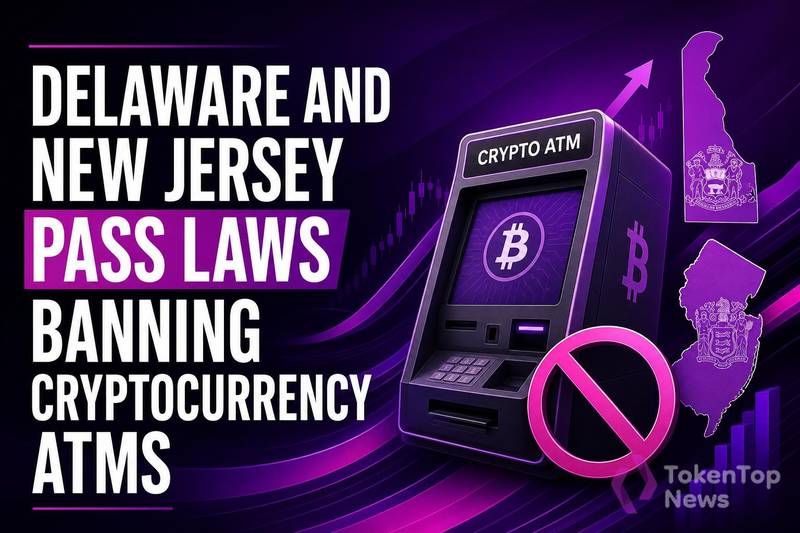
What Delaware and New Jersey Actually Approved
Delaware’s legislative effort is tracked under House Bill 156, which moves to restrict or ban the operation of cryptocurrency ATM kiosks within the state. The bill reflects growing concern among state lawmakers that crypto ATMs serve as a primary vector for fraud targeting elderly and vulnerable residents.
New Jersey’s companion effort, Senate Bill 2141, targets the same class of machines. The bill advanced through committee proceedings in early June 2026, with the state Senate Commerce Committee taking up the measure during a scheduled session.
Both states have framed the legislation primarily as consumer protection measures. Crypto ATMs have drawn scrutiny because scammers frequently instruct victims to deposit cash at the machines, converting funds into cryptocurrency that is then quickly transferred to wallets controlled by the fraudsters.
Who the Crypto ATM Ban Affects
Operators running crypto ATM networks in Delaware and New Jersey face the most immediate disruption. Companies that have installed kiosks in convenience stores, gas stations, and shopping centers across both states would need to remove or deactivate their machines once the laws take effect.
For consumers in both states, the legislation would eliminate a cash-to-crypto on-ramp that, despite its controversy, has served users who lack traditional banking access or prefer anonymous transactions. Those users would need to shift to exchange-based platforms requiring identity verification, similar to the compliance standards already shaping how major exchanges manage their product listings.
Businesses that host crypto ATMs and collect placement fees from operators also stand to lose a revenue stream. The broader crypto ATM industry, which has expanded rapidly across the United States in recent years, now faces the prospect of a state-by-state regulatory patchwork that could reshape where and how these machines operate.
Why This Matters for US Crypto Regulation
The simultaneous movement by two mid-Atlantic states signals that crypto ATM regulation is becoming a bipartisan, multi-state priority. Unlike broader debates over digital asset classification or exchange oversight, crypto ATM bans target a specific, physical piece of infrastructure that state legislatures can regulate without waiting for federal action.
The fraud-prevention rationale driving both bills aligns with a pattern seen in other recent state-level crypto actions. Lawmakers have increasingly focused on the consumer-facing endpoints of the crypto ecosystem, where losses from scams are most visible and politically salient. The New Jersey legislative digest for the current session reflects this enforcement-first posture.
The regulatory focus on crypto access points comes at a time when major industry players are also refining their internal processes around digital asset handling. Meanwhile, firms like Tether continue expanding into new ventures, underscoring the contrast between a maturing industry and lawmakers still working to define basic rules for consumer-facing crypto infrastructure.
Whether other states follow Delaware and New Jersey will depend in part on how effectively the bans reduce fraud complaints. States considering similar measures will likely monitor enforcement outcomes closely before pursuing their own legislation.
Disclaimer: This article is for informational purposes only and does not constitute financial or investment advice. Cryptocurrency and digital asset markets carry significant risk. Always do your own research before making decisions.