
Bitcoin briefly traded above $75,000 on April 15, 2026, but failed to hold the level as both major market trackers showed the price slipping back below that threshold within hours. The move, while notable, landed in a market still gripped by extreme fear.
Bitcoin's move above $75,000 did not hold
CoinGecko data showed Bitcoin at $74,822.11 with a 24-hour high of $75,206.21 on April 15. The intraday spike confirmed that BTC crossed the $75,000 mark, but it did not stay there.
CoinMarketCap independently showed BTC at $74,796.99, with a 24-hour high of $75,283.07 and a low of $73,549.20. Both trackers told the same story: a brief reclaim followed by rejection.
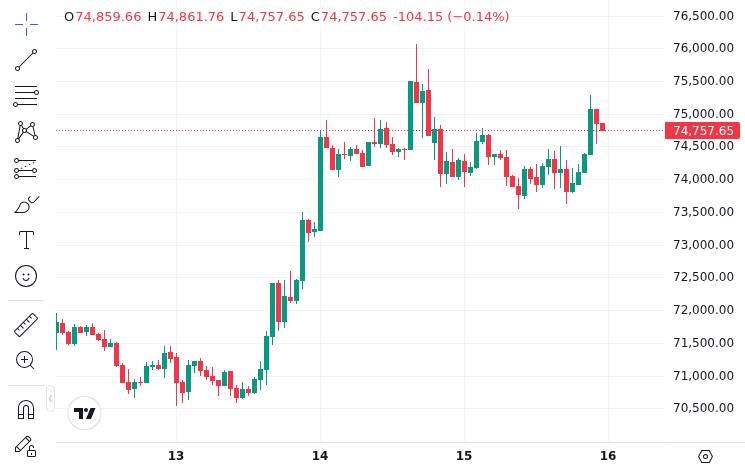
The original claim that Bitcoin was still trading above $75,000 came from a single Telegram channel post. Neither CoinGecko nor CoinMarketCap confirmed a sustained hold above that level at the time of verification.
This pattern matters for traders watching the $78,000 resistance zone that has capped recent rallies. A failed reclaim of $75,000 suggests the market lacks the momentum to test higher levels in the near term.
Market data showed a bounce, but sentiment stayed fragile
The CoinGecko API returned a spot price of $74,788, reflecting a 24-hour gain of 0.74%. Trading volume over the same period reached roughly $40.74 billion, with Bitcoin's total market cap sitting at approximately $1.50 trillion.
A 0.74% daily gain and $40 billion in volume were enough to push BTC past $75,000 intraday, but not enough to sustain it. The move looked more like a liquidity wick than a conviction-driven breakout.
The disconnect between the price bounce and broader sentiment was stark. The Fear and Greed Index sat at 23, labeled Extreme Fear. That reading suggests most market participants remained defensive despite the brief spike above $75,000.
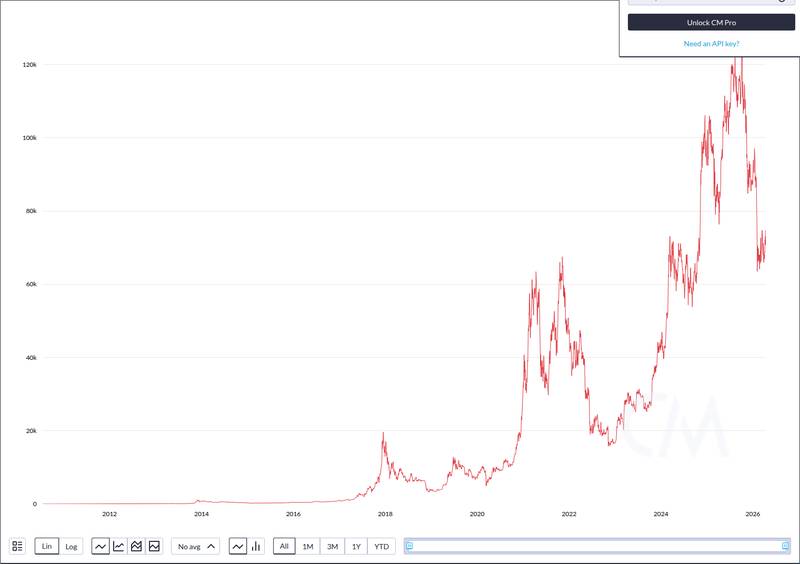
Bitcoin's circulating supply stood at 20,016,309 BTC out of a maximum 21,000,000, with an all-time high of $126,080 recorded on October 6, 2025. The current price remains roughly 40% below that peak, context that helps explain the fearful sentiment even on a green day.
Recent ETF flow data had shown intermittent institutional interest in Bitcoin, but a single session's intraday touch of $75,000 does not reverse the broader pattern of cautious positioning that has defined the market since late 2025.
Why the failed hold is the real story
Generic "Bitcoin pumps" headlines appeared across crypto media after the move. But the verified data paints a more nuanced picture: BTC touched $75,000, then gave it back.
No fetched evidence from either CoinGecko or CoinMarketCap proved that Bitcoin sustained trade above $75,000 for any meaningful duration. The 24-hour highs of $75,206 and $75,283 on the two platforms confirm the level was breached, but spot prices roughly $200 to $500 below it at verification time confirm the rejection.
For readers who followed Adam Back's recent comments on Bitcoin's maturation as an asset class, this type of price action is instructive. Brief level reclaims followed by pullbacks tend to define range-bound markets, not the start of sustained rallies.
The $75,000 threshold now serves as a near-term sentiment marker. A clean daily close above it, confirmed across multiple exchanges, would carry more weight than an intraday wick. Until that happens, the failed hold, not the brief pump, is what the data actually supports.
Disclaimer: This article is for informational purposes only and does not constitute financial or investment advice. Cryptocurrency and digital asset markets carry significant risk. Always do your own research before making decisions.