
Bitcoin exchange reserves have dropped to 2.6 million BTC, the lowest level since November 2018, as institutional buyers and public companies continue pulling coins off trading platforms. With the Fear & Greed Index sitting at 17 (Extreme Fear) and BTC trading near $71,635, the shrinking exchange supply paints a structurally defensive picture even as broader sentiment stays risk-off.
Fidelity Digital Assets reported that over 425,000 BTC moved off exchanges since November 2024, with public companies adding nearly 350,000 BTC following the U.S. election. Public companies alone have been buying over 30,000 BTC per month so far in 2025.
➡️ 2.6M BTC on exchanges, lowest level since Nov. 2018.
— Fidelity Digital Assets (@DigitalAssets) April 24, 2025
➡️ Over 425K bitcoin moved off exchanges since Nov. 2024.
➡️ Public Companies have added nearly 350K bitcoin post-U.S. election.
➡️ Public Companies have bought over 30K bitcoin per month so far in 2025.
Source: @DigitalAssets on X
What Exchange Reserves Say About Bitcoin's Defensive Setup
Exchange reserves measure the total BTC held in wallets controlled by centralized exchanges. When reserves fall, it means fewer coins sit in the most liquid venue for immediate selling, effectively tightening the available supply that could hit the market during a downturn.
The sustained drawdown from exchange wallets does not guarantee price appreciation. It does, however, reduce the pool of immediately sellable supply. Historically, periods of declining exchange balances have coincided with relative price resilience during risk-off stretches, as sellers simply have less inventory positioned for quick liquidation.
Supply Availability and Short-Term Market Impact
With a Glassnode report placing exchange balances around 2.7 million BTC, the data aligns broadly with Fidelity's 2.6 million figure. Glassnode further noted that combined exchange and ETF custody balances have stayed near 3 million BTC, suggesting much of the "removal" reflects migration from exchange wallets to ETF custodians rather than a pure supply squeeze.

This distinction matters. Coins held by spot ETF custodians like Coinbase are not on exchange order books, but they are not in deep cold storage either. The structural shift followed U.S. SEC spot Bitcoin ETF approvals in January 2024, which created a new custody layer that absorbs coins previously sitting on exchanges.
Reserves remain one signal among many. Pairing them with volume trends, derivatives positioning, and netflow persistence gives a more complete picture than treating the drawdown as a standalone bullish indicator.
Bitcoin vs. Broader Crypto: Why the Reserve Divergence Matters
Bitcoin's reserve decline has been more consistent than the pattern seen across altcoins. While BTC balances on exchanges have trended lower for months, aggregate altcoin exchange holdings have not shown the same steady depletion, reflecting different investor behavior between accumulation-driven BTC flows and speculative rotation in smaller assets.
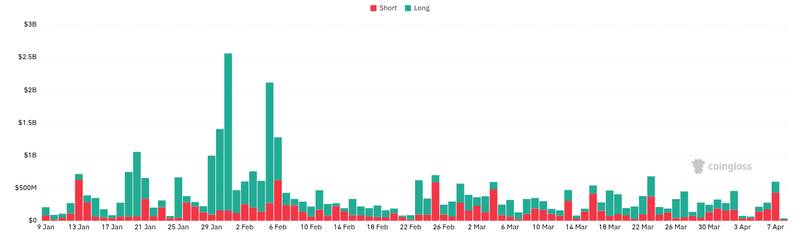
This divergence helps explain why BTC has held up relatively well during periods of broad liquidation events in crypto derivatives. When exchange-available supply is thinner, forced selling has less inventory to cascade through, which can dampen downside volatility relative to higher-beta tokens.
Relative Risk Profile and Volatility Sensitivity
BTC's 24-hour trading volume near $55.9 billion and a 4.3% daily gain show the asset can absorb significant flow without the extreme volatility that smaller-cap tokens experience under similar conditions. A market cap above $1.4 trillion provides a liquidity buffer that altcoins lack.
The divergence can fail. If a macro shock triggers redemptions from spot ETFs, those custodied coins re-enter the liquid market rapidly. The reserve picture would reverse in days, not weeks. Investors watching exchange balances as a defensive signal need to monitor ETF flow data with equal attention, similar to how stablecoin infrastructure developments can shift capital flows quickly.
How to Read the Signal Without Overfitting the Narrative
A single day's exchange netflow print can mislead. What matters is direction and consistency over weeks. A sustained trend of net outflows across multiple exchanges carries more weight than a large single-day withdrawal from one platform.
Confirmation vs. Contradiction Signals
Reserve drawdowns are confirmed as defensive when they coincide with rising spot volume, stable or declining open interest (indicating less leveraged speculation), and persistent negative netflows across at least three major exchanges. The current Fear & Greed reading of 17 suggests sentiment remains deeply cautious, which aligns with defensive positioning but also warns that panic selling could override structural supply tightness.
Contradiction signals include: rising exchange inflows over consecutive days, a spike in stablecoin outflows from exchanges (suggesting capital leaving crypto entirely), and ETF redemption streaks. If reserve trends reverse while sentiment stays in Extreme Fear, the defensive thesis weakens quickly.
For readers tracking this in real time, a practical checklist: monitor weekly netflow direction across Binance, Coinbase, and Kraken; cross-reference with ETF flow reports; check derivatives funding rates for signs of excessive leverage; and watch for divergence between BTC and altcoin reserve trends. No single metric tells the full story, and the market environment around data-driven market tools and price predictions continues to evolve rapidly.
According to unconfirmed reports, net BTC removal from exchanges has continued into 2026, though live verification of current CryptoQuant data was not possible at the time of publication. Until fresh on-chain data confirms the trend's persistence, the strongest evidence remains Fidelity's April 2025 snapshot and Glassnode's structural migration analysis.
Disclaimer: This article is for informational purposes only and does not constitute financial or investment advice. Cryptocurrency and digital asset markets carry significant risk. Always do your own research before making decisions.