Aster DEX Review: Aster Chain, Staking, Airdrops, and 1001x Perp Trading Explained
Aster DEX is a decentralized perpetual exchange built for traders who want CEX-style execution while keeping DeFi-native custody. The platform supports perpetual futures, spot trading, multi-chain access, hidden orders, grid trading, stock perpetuals, referrals, Aster Explorer, and yield-bearing collateral.

What makes Aster more interesting in 2026 is that it is no longer just another perp DEX. The project has launched Aster Chain, introduced Aster Staking, continued its Stage 6 airdrop, and is pushing deeper into RWA perpetual markets and high-leverage trading. Its 1001x perp trading feature also gives Aster one of the most aggressive leverage narratives in DeFi.
As of May 18, 2026, Aster’s Stage 6 airdrop claim window is active for eligible users. TokenTopNews previously covered Aster’s earlier distribution in Aster Airdrop Unlocks 704M Tokens Tomorrow, which gives useful background on how the project has used token incentives to drive adoption.
Table of contents
- What Is Aster DEX?
- How Aster DEX Works
- How I Tested Aster DEX and My Experience Using It
- Current Aster Airdrop and Farming Events
- What Is Coming Next for Aster?
- Key Features of Aster DEX
- Trading Fees and Costs
- Security Analysis
- Risks and Red Flags
- Aster DEX vs Other Perp DEXs
- Who Should Use Aster DEX?
- Expert Insight: Project Evaluation
- Conclusion
- FAQs
What Is Aster DEX?
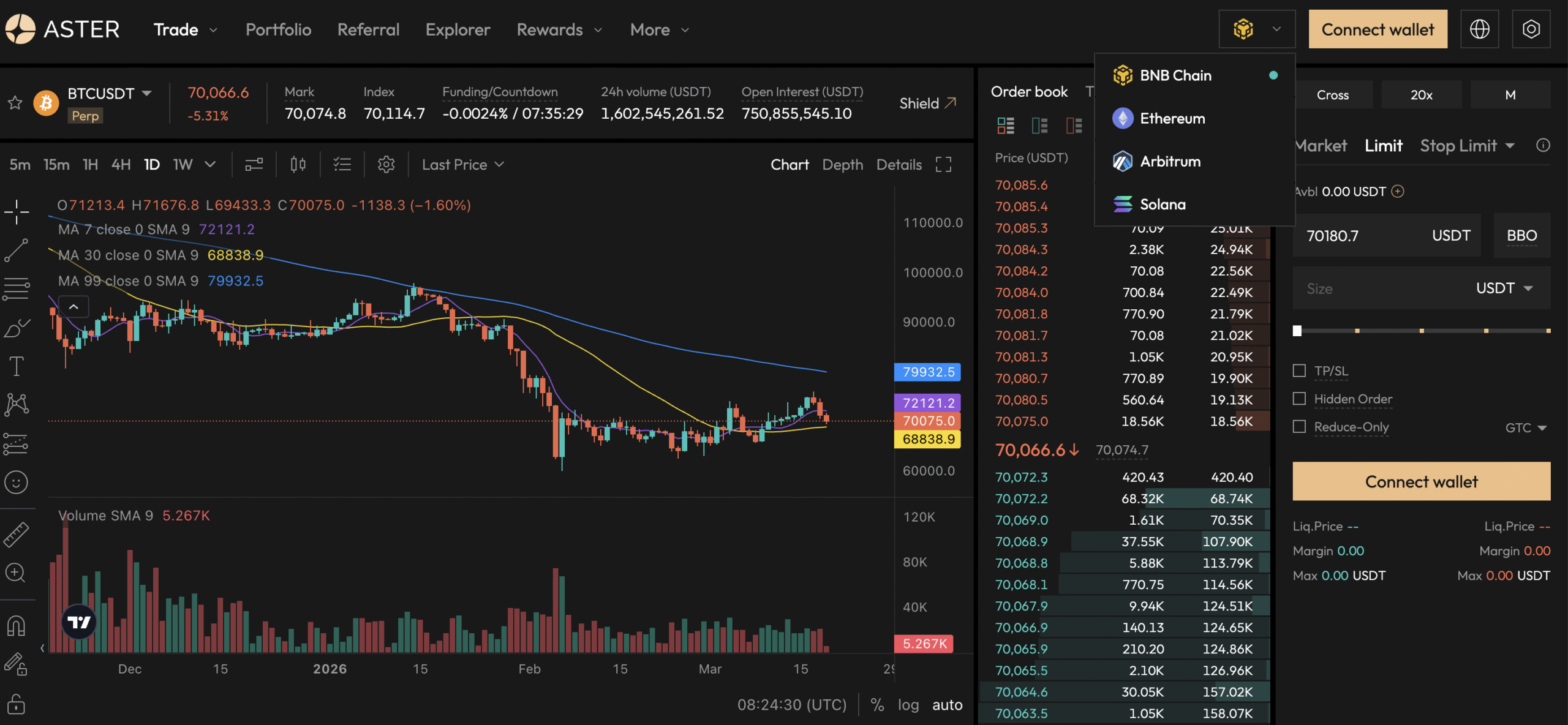
Aster DEX is a decentralized exchange focused on perpetual futures trading. It offers two main trading experiences: Aster Pro and Simple Mode.
- Aster Pro is the advanced trading interface. It is built for traders who want order-book trading, leverage controls, advanced order types, margin management, and execution tools closer to a centralized exchange.
- Simple Mode is designed for faster one-click trading. Aster is especially known for offering up to 1001x leverage on selected markets. This is a strong marketing hook, but also a serious risk factor. At extreme leverage, even a very small price movement can liquidate a position. Similar high-leverage trading narratives are appearing elsewhere in crypto, as TokenTopNews reported in Aevo Degen’s 1000x leverage stock trading launch.
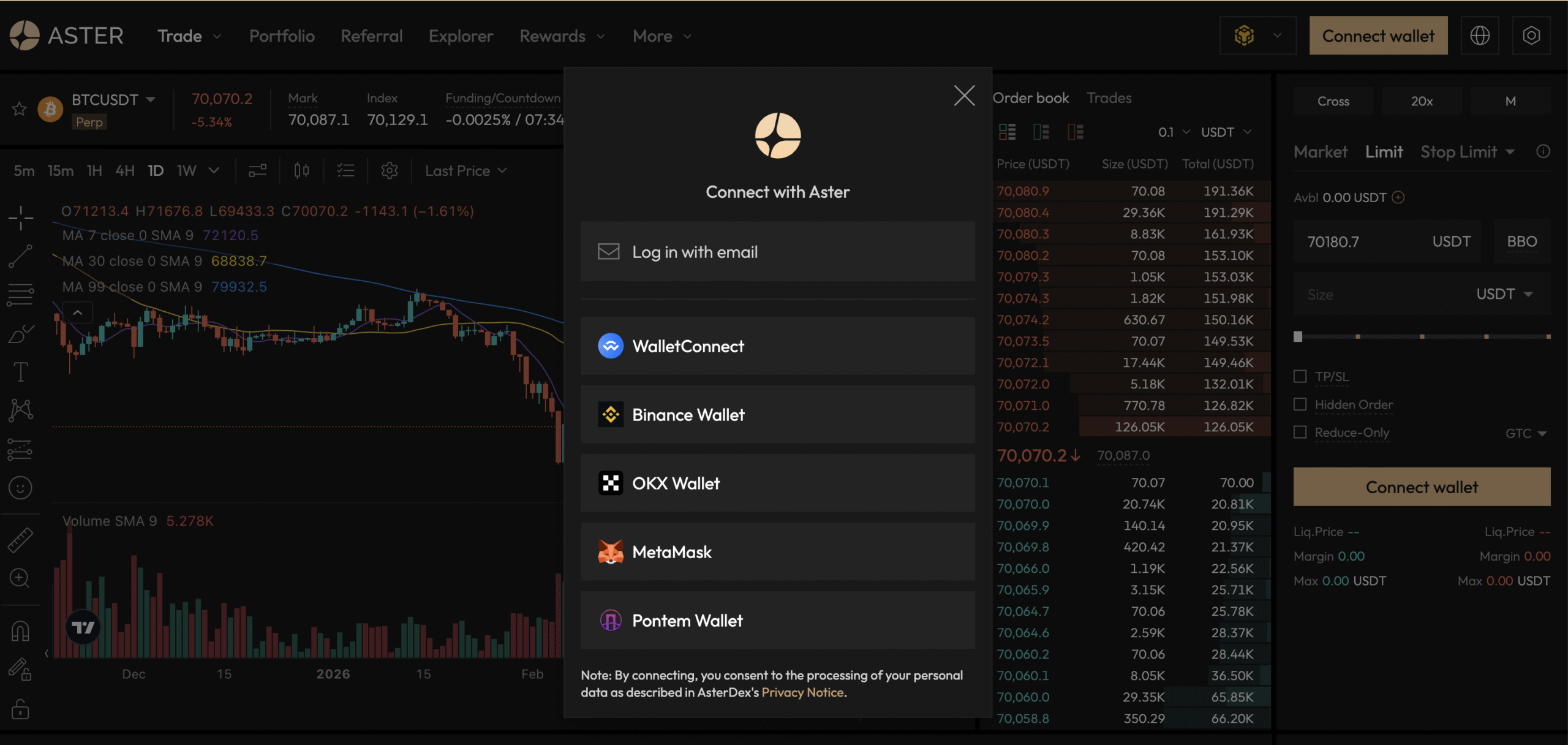
Aster currently supports several ecosystems, including BNB Chain, Ethereum ETH +0.00% , Arbitrum, and Solana. From the product walkthrough, users can connect wallets such as Binance Wallet, MetaMask, OKX Wallet, and other supported wallets.
How Aster DEX Works
Aster works through a mix of order-book trading, margin collateral, oracle pricing, and perpetual contracts. In Aster Pro, users deposit collateral, choose a trading pair, set leverage, and place orders such as market, limit, stop-loss, take-profit, or hidden orders. Users can access Aster a across BSC, Ethereum, Arbitrum, and Solana.
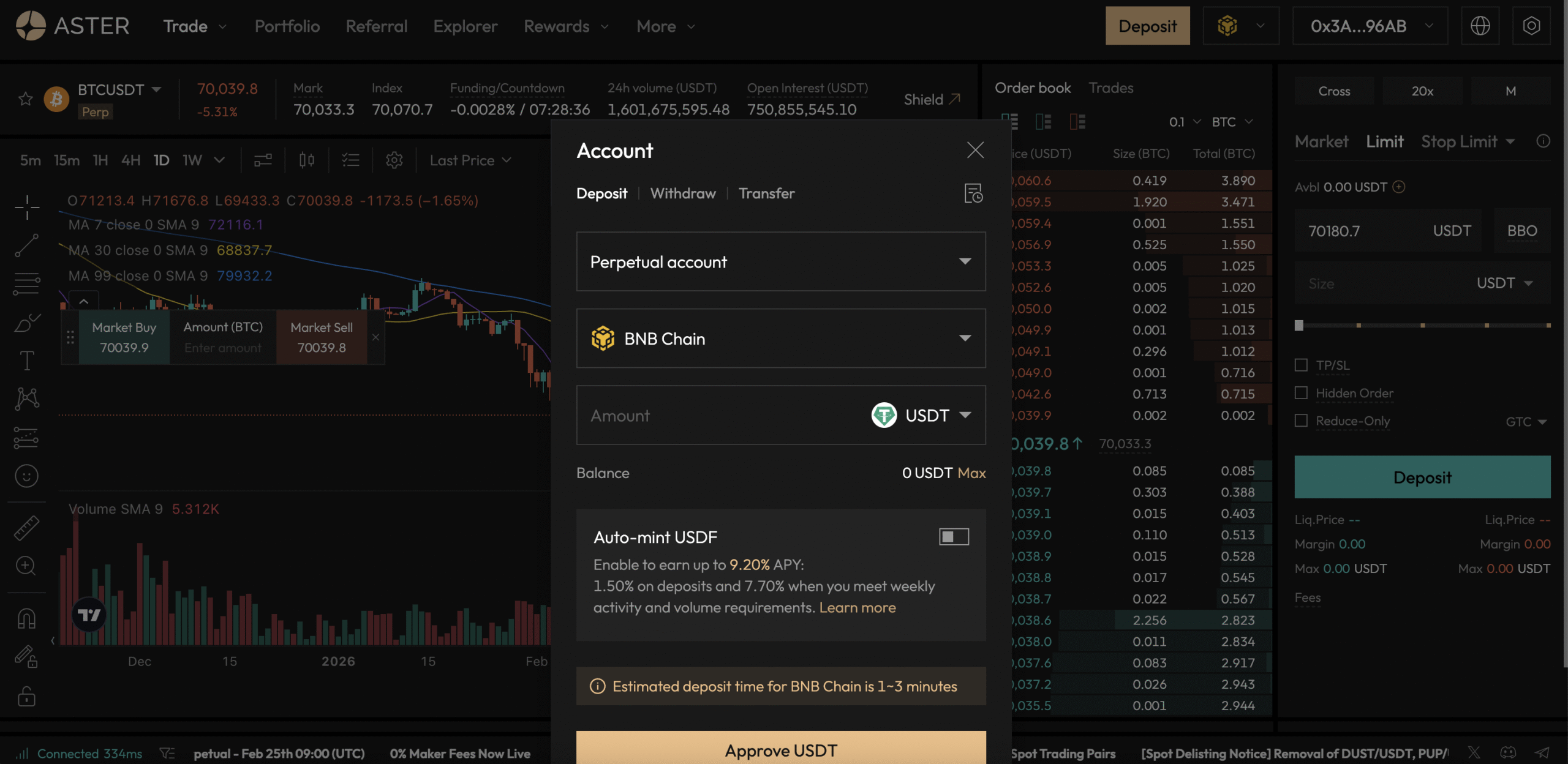
Multi-chain access matters because liquidity, gas fees, and user behavior vary across networks. TokenTopNews has also covered broader DeFi activity across Ethereum, Arbitrum, and Solana, which helps explain why perp DEXs are increasingly multi-chain.
In practice, BSC is often preferred by users who want faster and cheaper deposits. That fits the broader BNB Chain strategy of scaling for high-volume usage, including upgrades such as the BNB Chain block gas limit increase.
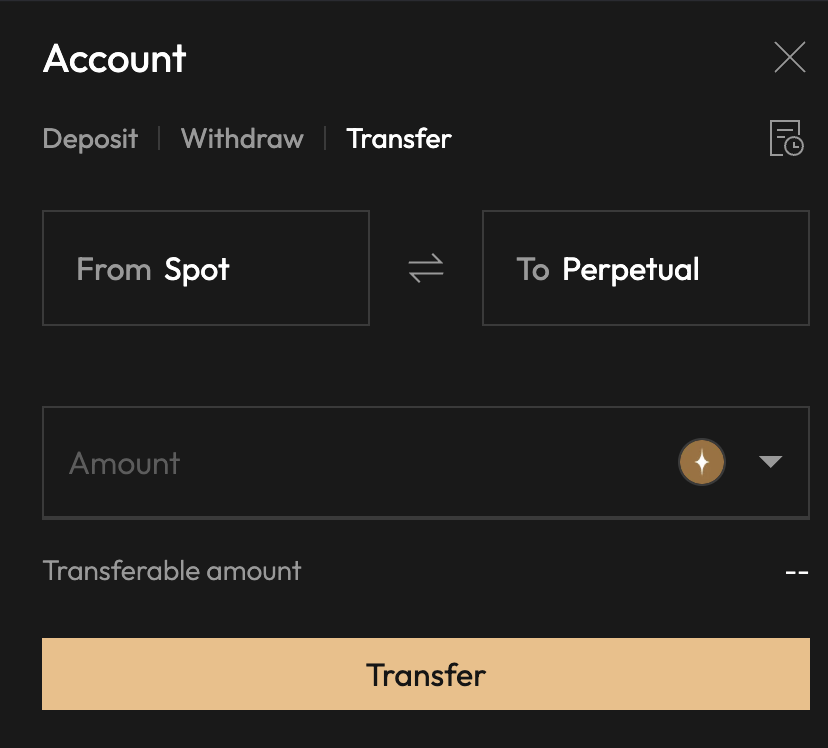
Aster also allows users to move funds between spot accounts and perpetual accounts, which is useful for traders who switch between spot trading, perp trading, and reward campaigns.
Aster’s core idea is capital efficiency. Users can use yield-bearing assets like USDF or asBNB as trading collateral while still earning rewards from those assets.
This is powerful, but it also adds risk because the trader is exposed not only to the perp position, but also to the collateral asset’s stability, liquidity, and protocol mechanics. This fits a broader DeFi trend where protocols expand collateral utility, similar to TokenTopNews’ coverage of River’s TVL growth from SolvBTC collateral on BNB Chain.
How I Tested Aster DEX and My Experience Using It
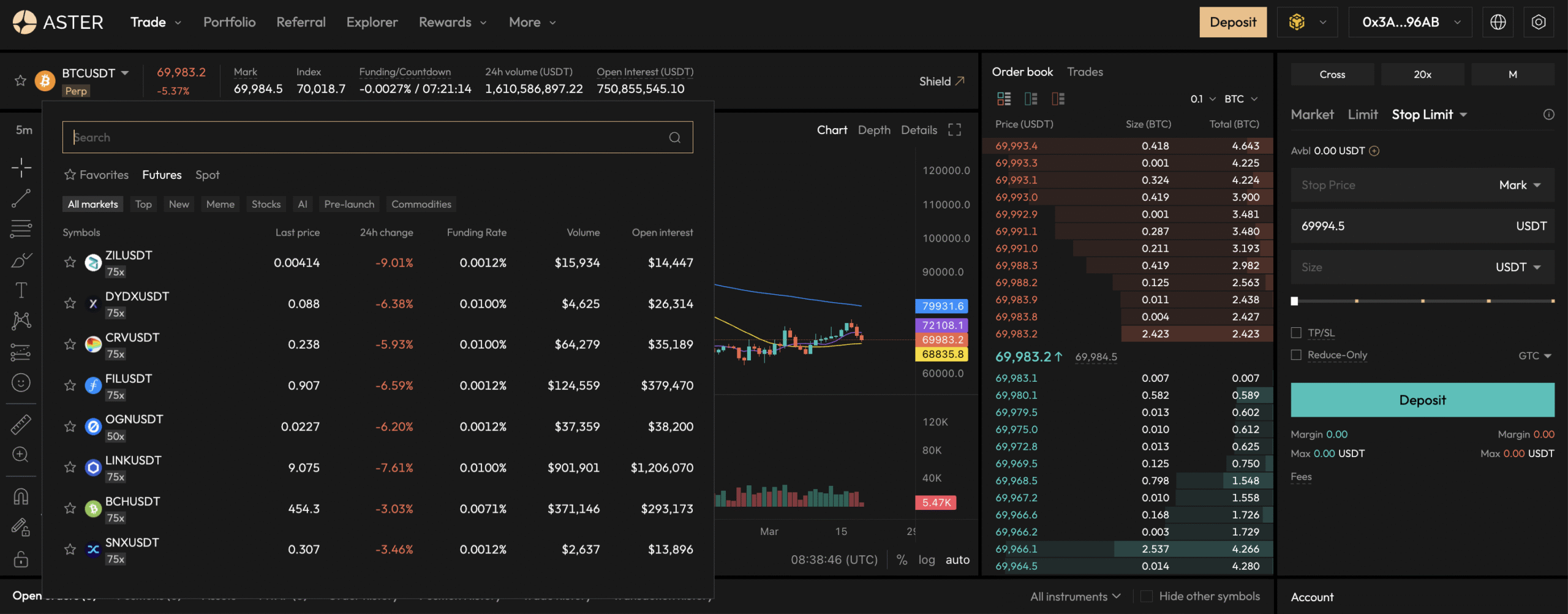
I reviewed Aster DEX using official Aster documentation, live market data, airdrop and reward pages, and a practical walkthrough from the provided Aster document. The goal was to check whether Aster is only a rewards-driven platform or a real derivatives venue with meaningful usage.
| Review Area | What I Checked | Key Finding |
|---|---|---|
| Product docs | Aster Pro, Simple Mode, fees, collateral, margin, hidden orders, stock perps | Aster has a broad feature set beyond basic perp trading |
| Market data | TVL, perp volume, open interest, fees, market cap | Aster shows real activity, not just a thin DeFi interface |
| Platform walkthrough | Wallet connection, deposit, transfer, portfolio, referral, explorer, rewards | Aster has a full trading and account-management flow |
| Rewards & airdrop | Stage 6 airdrop, points system, Trade & Earn, Rocket Launch, APX exchange | Incentives are active, but users must verify eligibility |
| Competitors | Hyperliquid, Lighter, GMX, dYdX | Aster is smaller than Hyperliquid, but broader in collateral and product design |
As of May 18, 2026, DefiLlama Aster data showed roughly the following metrics:
| Metric | Aster Data |
|---|---|
| TVL | ~$971.82M |
| 24h Perp Volume | ~$1.118B |
| 30d Perp Volume | ~$51.244B |
| Open Interest | ~$2.132B |
| 30d Fees | ~$5.93M |
| Market Cap | ~$1.708B |
These numbers suggest Aster is already a serious perp DEX, not just an early-stage farming app. Market data from CoinMarketCap’s ASTER page also helps track token-level performance, circulating supply, and exchange activity.
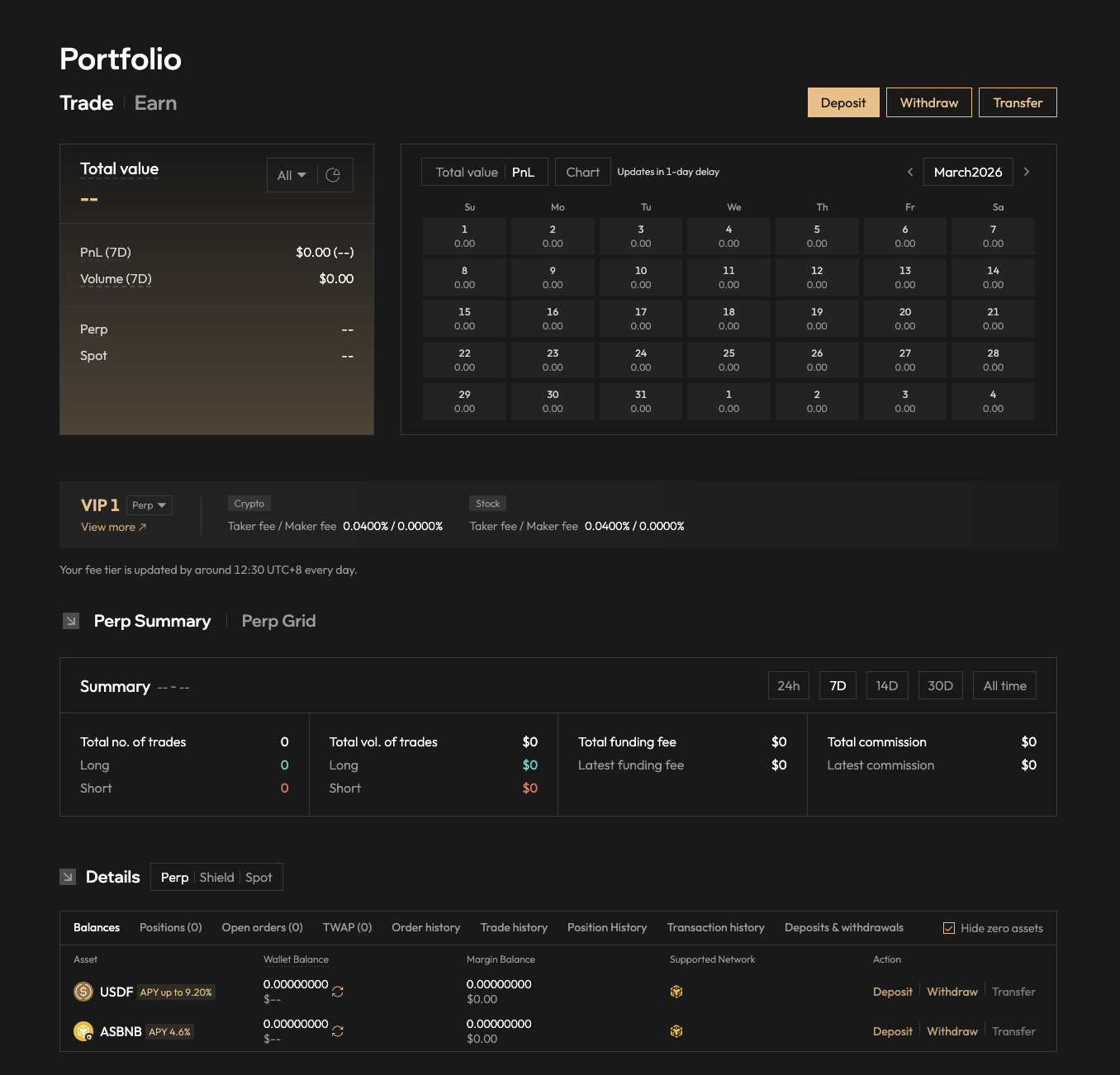
From a user experience angle, Aster feels built for active derivatives traders. The platform offers token search by category, portfolio tracking, PnL overview, volume history, VIP tier information, hidden orders, grid trading, stock perpetuals, and multi-asset collateral.
My takeaway: Aster has strong product depth and real usage metrics, but it should be treated as a high-risk trading venue, not a passive yield platform.
Current Aster Airdrop and Farming Events
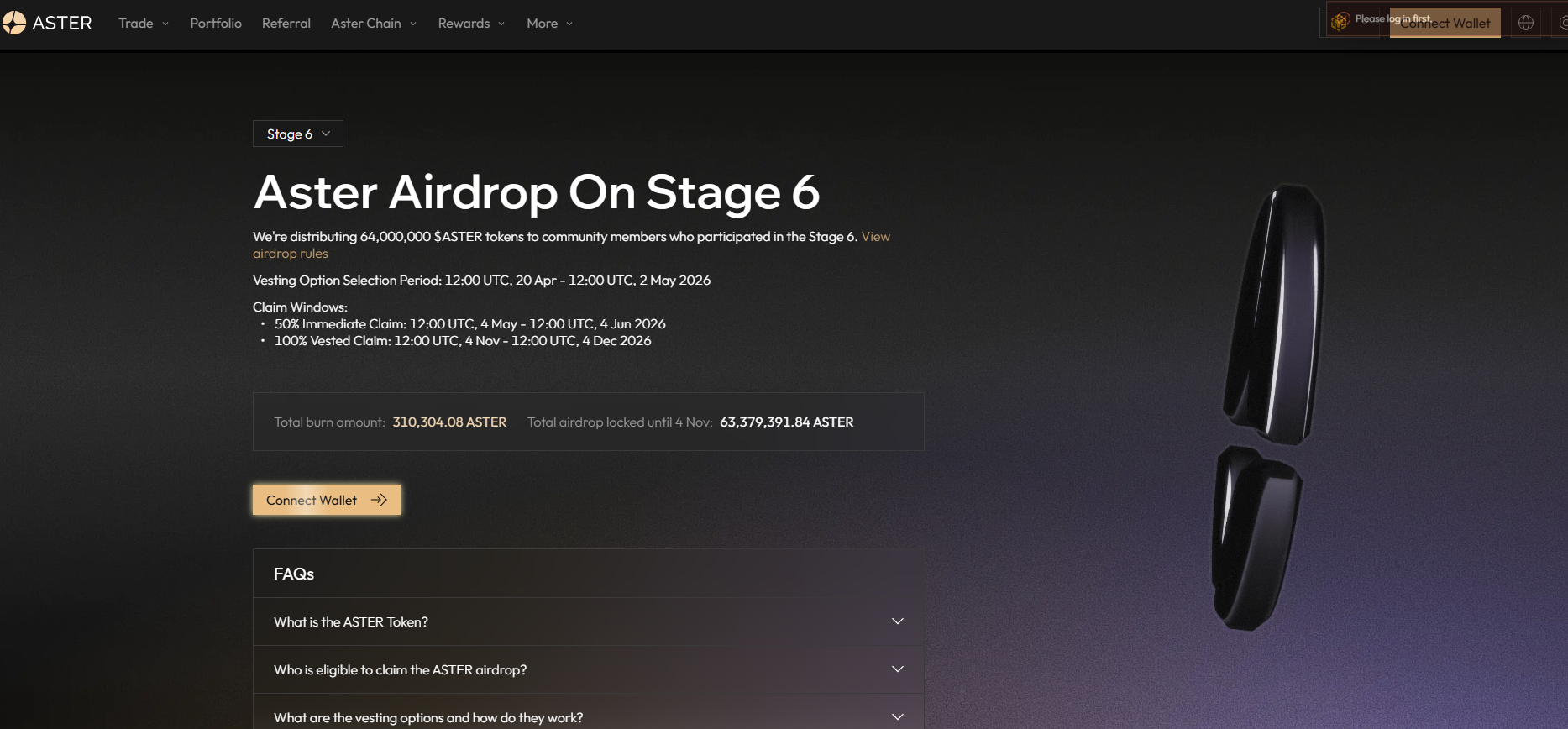
| Airdrop Item | Details |
|---|---|
| Current stage | Stage 6 |
| Allocation | 64,000,000 ASTER |
| 50% immediate claim | May 4, 2026 to June 4, 2026 |
| 100% vested claim | November 4, 2026 to December 4, 2026 |
| Eligibility | Based on previous Stage 6 activity and Rh Points |
As of May 18, 2026, the official Aster airdrop page shows Aster Airdrop Stage 6. This means there is currently an active ASTER claim window for eligible Stage 6 participants until June 4, 2026. The detailed campaign rules are listed in Aster Convergence Stage 6 documentation.
Aster’s rewards ecosystem includes several important sections:
| Reward Feature | What It Means | User Takeaway |
|---|---|---|
| Points | Earn points from trading volume, position holding, PnL, referrals, and other activity | Main system for airdrop-related participation |
| Trade & Earn | Use supported collateral while trading perps | Users may earn APY while trading |
| Rocket Launch | Trade selected spot/perp pairs for launch campaigns | Rewards may include ASTER and project tokens |
| Referral | Invite friends to trade on Aster | Users can earn referral rebates |
| APX Token Exchange | Swap legacy APX into ASTER | Relevant for older APX/ApolloX users |
Airdrop-driven activity is common across crypto markets. TokenTopNews has covered similar incentive dynamics in Binance Alpha’s SKATE airdrop and the WalletConnect Solana expansion with a 5M WCT airdrop.
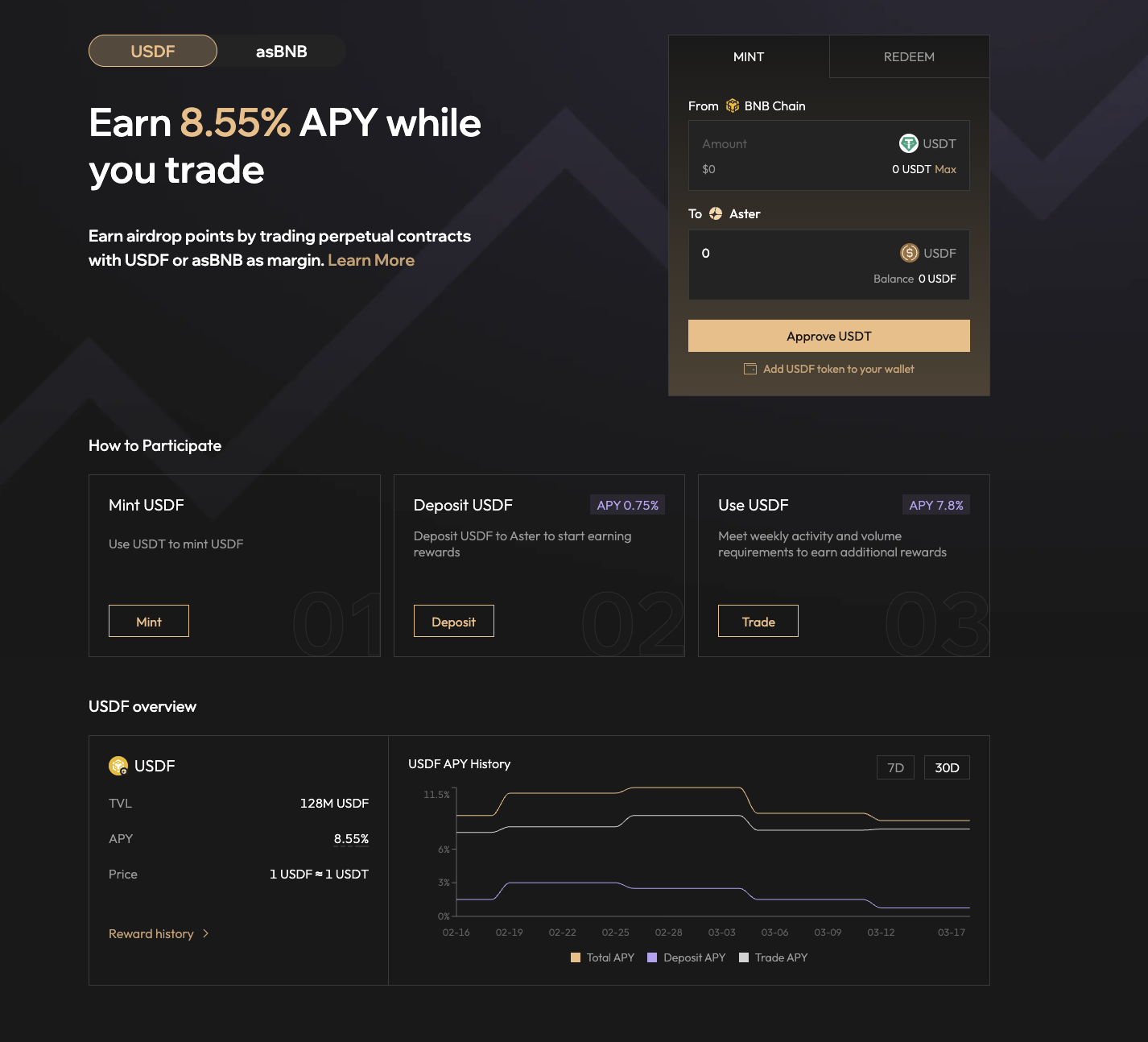
Aster’s Trade & Earn explains how users may earn APY on eligible collateral while trading. In the provided walkthrough, the example dashboard showed Net APY around 4.39%, while another screenshot displayed an APY banner above 8%. These rates can change, so users should always check the live dashboard before depositing.
For legacy users, Aster also provides APX Token Exchange, allowing eligible users from the older APX/ApolloX ecosystem to exchange APX for ASTER.
What Is Coming Next for Aster?
Aster’s next phase is not only about airdrops. According to the official Aster roadmap, the project is expanding from a perp DEX into a broader trading infrastructure stack.
| Catalyst | Timeline | Why It Matters |
|---|---|---|
| Aster Chain | Launched March 16, 2026 | Gives Aster its own Layer-1 infrastructure for trading |
| Aster Staking | Launched March 20, 2026 | Adds token utility and potential APY for ASTER holders |
| Aster Governance | Q2 2026 | Gives users voting rights over project development |
| Aster Smart Money | Q2 2026 | Lets users follow or share live trading strategies |
| RWA Upgrade | 2026 roadmap | Expands stock perpetual markets and listed assets |
| Stage 6 Vested Claim | Nov 4-Dec 4, 2026 | Creates another major token-related event later in 2026 |
This roadmap gives Aster a stronger narrative than many perp DEXs. The project is not only competing on fees or leverage. It is trying to build a full trading ecosystem around Aster Chain, privacy-focused execution, RWA perps, staking, governance, and community incentives.
The most important upcoming point is the Stage 6 vested claim window in November 2026. That could become a major token-related event because users who chose the 100% vested option will be able to claim their allocation during that period.
Key Features of Aster DEX
- Aster Pro: is the main advanced trading product. It offers order-book trading, leverage, margin settings, order types, and professional execution tools. This is the part of Aster that most directly competes with other major perp DEXs.
- Simple Mode: is designed for faster trading with fewer manual steps. It is one of Aster’s most attention-grabbing features because of its very high leverage. However, 1001x leverage should be treated carefully. At extreme leverage, even a small market move can liquidate a position.
- Hidden orders: allow traders to place limit orders without fully revealing their trading intent in the public order book. This can be useful for larger traders who want to reduce visible market impact.
- Multi-Asset Collateral: Aster supports multi-asset collateral, allowing users to trade with assets beyond standard USDT. This includes assets like USDF, asBNB, BTC, ETH, and ASTER. This gives users more flexibility but also makes risk management more complex.
- Portfolio Dashboard: Aster includes a portfolio page where users can check account overview, PnL, volume, VIP tier, and trading history. This is useful for active traders who need to monitor both performance and account status.
- Referral Program: Aster has a referral system where users can invite friends and earn rewards or rebates from their activity. The provided walkthrough shows a referral page advertising up to 10% rebate for inviting friends.
- Aster Explorer: Aster also provides Aster Explorer, the official blockchain explorer for Aster Chain. Users can search block IDs, transaction hashes, or wallet addresses to view on-chain information.
- Yield-Bearing Margin Assets: Aster’s support for USDF and asBNB as collateral is one of its most distinctive features. Users can potentially earn yield while using those assets as margin. The tradeoff is additional collateral risk. The wider DeFi market is also seeing more advanced yield products, such as Pendle’s Boros expansion covered in Pendle Finance Expands Boros Funding Limits.
- Stock Perpetuals and RWA Perps: Aster also supports stock perpetuals, giving users synthetic exposure to stock prices. These are not real shares and do not give users shareholder rights. They are derivatives products with their own pricing, liquidity, and regulatory risks.
- Grid Trading: Grid trading lets users automate buy and sell orders across a price range. This can work well in sideways markets, but it can also perform poorly during strong trends or high volatility.
Trading Fees and Costs
Aster also offers a 5% fee discount when users pay perpetual trading fees with ASTER. However, users should not look only at maker and taker fees. Real trading costs can also include funding rates, slippage, gas fees, liquidation costs, and collateral-related opportunity costs.
| Contract Type | Maker Fee | Taker Fee |
|---|---|---|
| USDT Perpetuals | 0% | 0.04% |
| USD1 Perpetuals | 0% | 0.005% |
Security Analysis
Aster publishes several audit reports across its product ecosystem, including reports for AsterVault, AsterEarn, asBNB, USDF, asUSDF, and asCAKE. Auditors listed in Aster’s audit report page include Salus Security, PeckShield, and Halborn.
This is a positive transparency signal. Public audit reports are better than vague claims that a protocol is “secure” or “audited.” However, audits do not remove all risk. Aster still has several risk categories:
| Risk Type | Why It Matters |
|---|---|
| Smart contract risk | Audited contracts can still contain undiscovered bugs |
| Oracle risk | Incorrect prices can affect liquidations and execution |
| Liquidity risk | Volatile markets can increase slippage |
| Collateral risk | Yield-bearing assets depend on extra protocol layers |
| Margin risk | Cross-margin setups can make losses spread across positions |
| Campaign risk | Incentives can encourage overtrading or distorted volume |
| User error risk | Multiple account types, chains, and reward systems can confuse beginners |
The GMX exploit covered by TokenTopNews in GMX Halts V1 Trading on Arbitrum and Avalanche is a useful reminder that even established DeFi derivatives platforms can face protocol-level risks.
Overall, Aster looks more transparent than many unaudited DeFi platforms, but it is still a high-risk derivatives protocol.
Risks and Red Flags
The biggest risk with Aster is not simply whether the platform is legitimate. The bigger issue is that Aster combines many complex products in one place.
Key risks include:
- 1001x leverage can liquidate users from tiny price movements.
- Multi-asset margin can make liquidation risk harder to track.
- Yield-bearing collateral depends on extra protocol mechanics.
- Airdrop farming can push users into overtrading.
- Rocket Launch campaigns may encourage volume farming.
- Stock perps are synthetic exposure, not real stock ownership.
- Referral rewards can create biased promotion.
- Campaign rules can change at Aster’s discretion.
- Staking APY may vary and should not be treated as guaranteed yield.
- Aster Chain creates a new infrastructure dependency for the ecosystem.
Users should also be careful with phishing. Aster’s docs warn that claiming airdrops should not require token approvals. Users should verify they are on the official Aster domain before connecting a wallet.
Aster DEX vs Other Perp DEXs
Approximate protocol TVL checked on May 18, 2026:
| Platform | Approx. TVL | Main Strength | Main Weakness |
|---|---|---|---|
| Hyperliquid | ~$5.1B | Deep liquidity, dominant perp DEX mindshare | More competitive, less multi-chain DeFi collateral flexibility |
| Aster | ~$968M | Multi-chain trading, hidden orders, stock perps, yield-bearing collateral | Complex risk stack, very high leverage modes |
| Lighter | ~$489M | Fast-growing perp DEX, strong execution narrative | Newer and still proving durability |
| GMX | ~$205M | Established DeFi perp brand | Slower product momentum versus newer order-book DEXs |
| dYdX | ~$139M | Long-running derivatives brand | Has faced stronger competition from newer perp venues |
Aster’s positioning is clear: it is trying to be a feature-rich perp DEX with CEX-like tools and DeFi-native collateral efficiency. It is not as dominant as Hyperliquid by TVL, but it offers a broader DeFi collateral and product mix.
For broader context, TokenTopNews has covered competitor developments such as dYdX acquiring Pocket Protector for social trading, which shows how competitive the on-chain derivatives market has become.
Who Should Use Aster DEX?
Aster is best suited for experienced derivatives traders who understand leverage, liquidation, funding rates, collateral ratios, and position sizing. Aster may fit users who want:
- Advanced perp trading
- Multi-chain market access
- Hidden orders
- Grid strategies
- Yield-bearing collateral
- Portfolio tracking
- Referral rewards
- Airdrop and campaign exposure
- ASTER staking exposure
- Synthetic stock and RWA perp markets
Aster is not ideal for beginners, passive investors, or users who only want to farm airdrops without understanding trading risk. If users farm points by overtrading, the cost of fees, slippage, and liquidation losses can easily exceed any future reward.
Expert Insight: Project Evaluation
Aster is a serious perp DEX with real traction. Its TVL, perp volume, open interest, audit transparency, and active campaign structure show that it is more developed than many short-term DeFi projects.
The project’s biggest strength is product breadth. It combines trading, collateral efficiency, yield assets, synthetic stock exposure, referral incentives, launch campaigns, staking, airdrop mechanics, and token migration tools in one ecosystem.
The strongest forward-looking narrative is Aster Chain. If Aster can use its own L1 to improve trading speed, ecosystem control, and user incentives, it may become more than a perp DEX interface. It could become a broader derivatives infrastructure layer.
The biggest concern is risk density. Aster stacks many risk layers together: leverage, derivatives, multi-asset collateral, yield-bearing assets, staking, campaign farming, and cross-chain usage. This can be powerful for advanced users but dangerous for inexperienced traders.
From an evaluation perspective, Aster is worth watching, but it should be framed as a high-risk derivatives platform, not a simple DeFi yield product.
Conclusion
Aster DEX is one of the more feature-rich perp DEXs in the market. It offers Aster Pro, Simple Mode, 1001x leverage, hidden orders, grid trading, stock perps, multi-asset collateral, Aster Chain, Aster Staking, Aster Explorer, referrals, Rocket Launch, Trade & Earn, and an active rewards ecosystem.
The current key event is Stage 6 ASTER airdrop claiming, with the 50% immediate claim window open until June 4, 2026 for eligible users. A second major token event comes later with the 100% vested claim window from November 4 to December 4, 2026.
Final verdict: Aster is a strong platform for experienced DeFi traders, especially those interested in perp trading, airdrops, staking, and RWA perps. But it is not beginner-friendly. The upside is advanced trading flexibility; the downside is leverage, liquidation, collateral, campaign, and infrastructure risk.
FAQs
Is there an active Aster airdrop now?
Yes. As of May 18, 2026, Aster’s Stage 6 airdrop claim window is active for eligible users. The 50% immediate claim period runs from May 4 to June 4, 2026.
What is Aster Chain?
Aster Chain is Aster’s own Layer-1 blockchain, launched on March 16, 2026. It is designed to support Aster’s trading ecosystem and future infrastructure expansion.
What are Aster DEX fees?
Aster lists 0% maker and 0.04% taker fees for USDT perpetuals. For USD1 perpetuals, it lists 0% maker and 0.005% taker fees.
Is Aster DEX safe?
Aster has published audits from firms including Salus Security, PeckShield, and Halborn, but it still carries smart contract, oracle, liquidation, collateral, staking, and campaign risks.