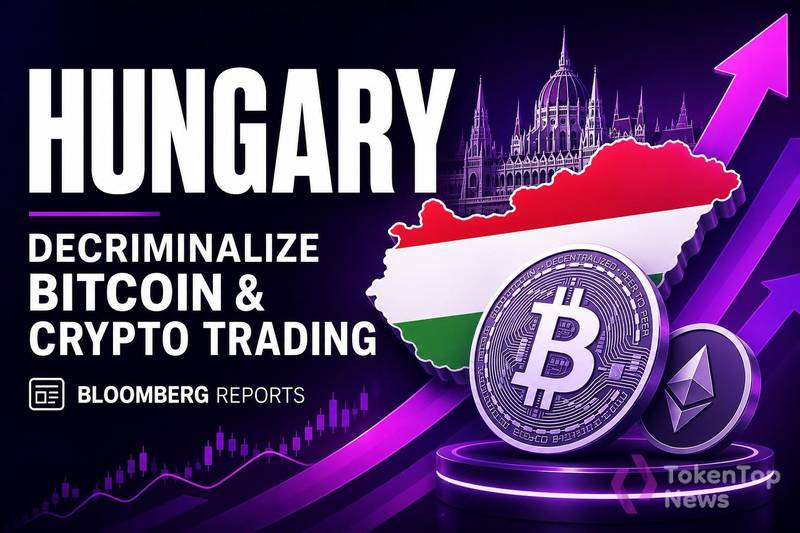
Hungary to Decriminalize Bitcoin and Crypto Trading, Bloomberg Reports
Hungary is set to decriminalize Bitcoin BTC +0.00% and cryptocurrency trading, reversing penalties introduced under the Orban government, according to a Bloomberg report that signals a notable shift in the country’s approach to digital asset regulation.
What Bloomberg Report Says About Hungary’s Crypto Trading Shift
Bloomberg Tax reported that Hungary plans to decriminalize crypto trading in a reversal from Orban-era policy. The move would remove criminal penalties currently attached to cryptocurrency trading activity in the country.
The reported change centers on the legal treatment of trading, not a broader regulatory framework for digital assets. Hungary had previously tightened its stance on crypto, introducing penalties that made trading activity a potential criminal matter.
According to reporting from Crypto.news, Hungary intends to scrap crypto trading penalties that followed a 2025 crackdown. The shift represents a direct reversal of the enforcement posture adopted under Prime Minister Viktor Orban’s government.
The Block also confirmed the policy direction, reporting that Hungary is reversing Orban-era crypto rules. Multiple outlets covering the story point to the same conclusion: criminal liability for crypto trading is being walked back.
Why Decriminalizing Crypto Trading Would Matter
Decriminalization is distinct from full legalization or comprehensive regulatory clarity. It means individuals would no longer face criminal charges for trading crypto, but it does not necessarily establish a licensing regime or consumer protection framework.
For traders and investors in Hungary, the practical impact would be significant. Criminal penalties create a chilling effect that discourages participation entirely, even among those willing to comply with tax and reporting obligations.
Removing those penalties could open the door to broader local crypto participation. Hungary’s approach mirrors a pattern seen in other jurisdictions where initial crackdowns gave way to more measured regulatory stances as governments recognized the difficulty of enforcing blanket bans.
The move also carries implications for wider European crypto policy discussions. As EU member states implement the Markets in Crypto-Assets (MiCA) regulation, Hungary’s shift from criminalization to a softer stance could influence how neighboring countries approach enforcement. Exchanges that had previously avoided operating in Hungary, similar to how Bybit recently adjusted its product offerings in response to regulatory shifts, may reconsider their position.
What to Watch as the Hungary Crypto Story Develops
Several key details remain unclear from the initial reports. The specific legislative text, implementation timeline, and scope of the decriminalization have not been fully detailed in the coverage so far.
Traders should watch for official government announcements specifying which activities are covered. Decriminalizing spot trading, for example, would have different implications than extending the same treatment to derivatives or DeFi activity, areas where exchanges globally have been delisting certain trading pairs to stay compliant.
Hungary’s existing legal framework will need formal amendment for the policy change to take effect. Until the official legislative text is published, the Bloomberg report represents a stated intention rather than enacted law.
Enforcement guidance will be the final piece. Even after decriminalization, questions around tax treatment, reporting requirements, and anti-money laundering compliance will determine how practical crypto trading becomes for Hungarian residents. Large-scale movements of digital assets, like the kind seen when FTX/Alameda unstaked significant SOL holdings, highlight why regulators remain focused on transparency even as they soften criminal penalties.
Disclaimer: This article is for informational purposes only and does not constitute financial or investment advice. Cryptocurrency and digital asset markets carry significant risk. Always do your own research before making decisions.