Polish President Vetoes Crypto Bill for Third Time
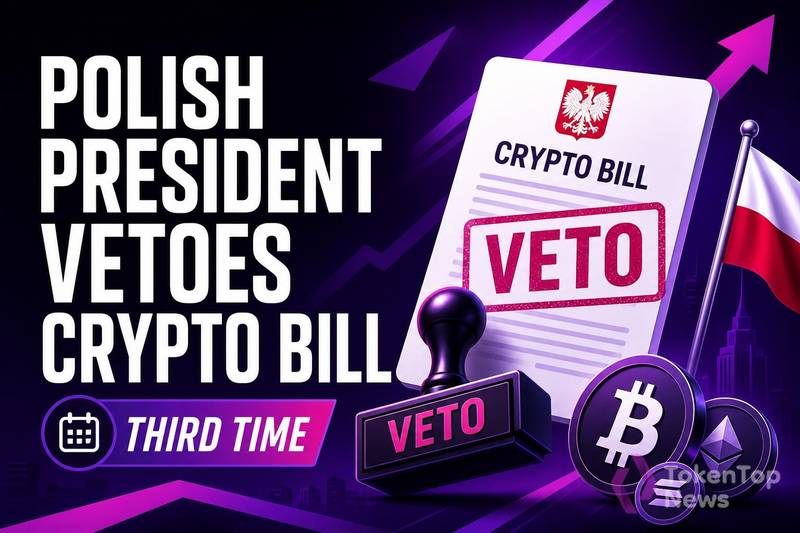
Poland’s president has vetoed a crypto regulation bill for a third time, extending a pattern of legislative friction that has left the country without a comprehensive framework for digital asset oversight.
What We Know About the Third Veto
The veto, reported by multiple outlets, marks the third time Poland’s head of state has blocked crypto-focused legislation from taking effect. The repeated rejections signal a fundamental disagreement between the presidency and parliament over how digital assets should be regulated domestically.
This is a regulatory story, not a market one. The bill’s failure does not appear tied to any specific token or price movement but rather to the structure and legal basis of the proposed rules themselves.
The pattern of three vetoes is unusual. It suggests the legislature has been unable or unwilling to address the presidency’s core objections between attempts, a dynamic that raises questions about whether Poland’s crypto industry will face prolonged regulatory limbo. Other countries navigating similar debates, such as those watching U.S. efforts to pass crypto clarity legislation, may find instructive parallels.
Constitutional Concerns Appear Central to the Dispute
An official page on the Polish presidency’s website frames the veto in constitutional terms, with its URL referencing the president as “guardian of the constitution.” This framing indicates the objections go beyond policy disagreement into questions about whether the bill’s provisions are legally sound under Polish constitutional law.
The exact constitutional objections have not been independently verified from the available evidence. However, the framing suggests the president views the bill as overstepping legislative authority or conflicting with existing legal protections, rather than opposing crypto regulation as a concept.
Poland’s financial regulator, the KNF, has also been involved in the broader regulatory discussion. A KNF publication related to crypto assets indicates that the domestic regulatory apparatus has been actively engaging with digital asset policy, even as the legislative path remains blocked.
The distinction matters. This is not a case of blanket hostility toward crypto from Poland’s government but rather a design dispute over how regulation should be constructed. For firms operating in the Polish market, the difference between “no regulation” and “contested regulation” carries meaningful compliance implications, similar to how institutional observers track regulatory clarity as a factor in market positioning.
What to Watch Next
A third veto leaves Poland’s crypto regulation effort in an uncertain state. The legislature could attempt a fourth version of the bill, but the repeated failures suggest any new draft would need to substantially address the constitutional concerns raised by the presidency.
Key checkpoints for readers monitoring this situation include: whether the Polish parliament introduces revised legislation that explicitly addresses the constitutional framing cited by the presidency, any formal statements from the KNF on interim regulatory guidance, and whether the presidency signals specific amendments that would satisfy its objections.
Poland’s position within the EU adds another layer. As EU-wide frameworks like MiCA take effect, the gap between Poland’s domestic regulatory stalemate and broader European standards may create pressure for resolution. Developments in cross-border crypto infrastructure could further highlight the cost of regulatory delay.
Until a bill clears the presidency, Polish crypto businesses operate without the licensing clarity that a comprehensive domestic framework would provide. The path forward depends on whether parliament can craft legislation that satisfies both its regulatory goals and the constitutional standards the president has repeatedly invoked.
Disclaimer: This article is for informational purposes only and does not constitute financial or investment advice. Cryptocurrency and digital asset markets carry significant risk. Always do your own research before making decisions.